Photo: Roy W. Lowe / USFWS — Public Domain
Rivers, Streams & Wetlands
Statewide, along water
By Threatened Colorado , Two Colorado natives , About us
Last reviewed , Checked against USFWS, CPW, NPS sources , Sources (8)
All elevations
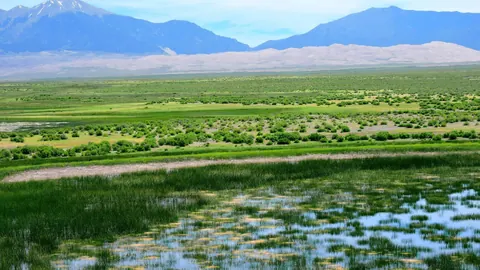
Wetlands make up less than 2% of Colorado's landscape, yet over 75% of the state's species benefit from them. Plains cottonwood forests line rivers on the eastern plains, and montane riparian forests begin around 6,000 to 7,500 feet.
Why it matters
Two kinds of streamside forest. On the plains, plains cottonwood grows with several kinds of willow; in the foothills and mountains, montane riparian forests "tend to be dominated by alder and blue spruce," the Colorado State Forest Service says. Montane riparian forest covers about 1 million acres, plains riparian forest about 250,000.
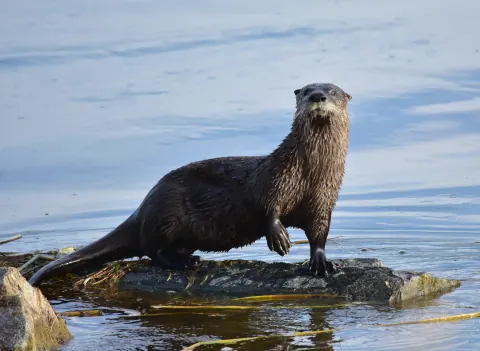
Small in area, large in use. "The vast majority of species that occupy montane habitats rely on riparian forests at some point in their life cycle," according to the Forest Service, from amphibians to beaver, river otter, elk and moose.
Plants
- plains cottonwood
Who lives here and why
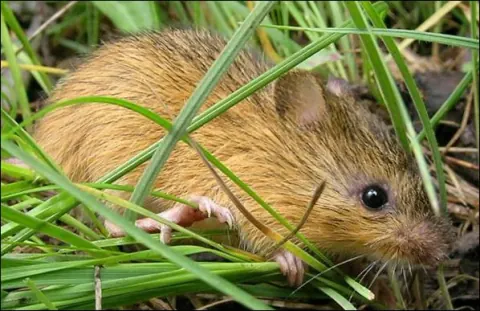
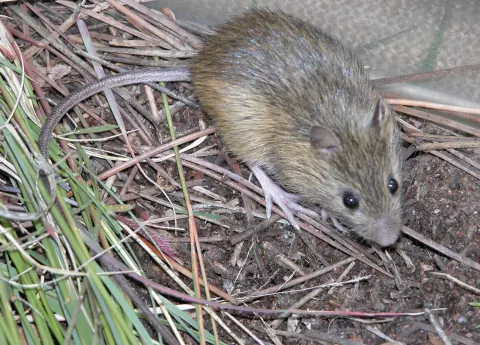
For some animals the streamside strip is the whole habitat. The endangered New Mexico meadow jumping mouse needs tall, dense sedges and forbs on soil kept wet by flowing water, and nests in drier ground beside it, USFWS says. One of its two known Colorado populations lives in the Sambrito Wetlands of Navajo State Park, according to the 2016 critical habitat rule.
Old cottonwoods are nest trees. In 1969, along the Arkansas River in Crowley and Otero counties, red-headed and Lewis's woodpeckers were found nesting side by side in dead or partly decayed plains cottonwoods, the red-headed mostly in the river bottom and Lewis's mostly in farmland trees.
Under pressure
- Less water in the channel. The Colorado State Forest Service lists pollution, surface water diversions and groundwater depletions among the threats to plains riparian forests, and CPW says Colorado has lost half of its wetlands. Water Diversion & Dewatering
- Invasive trees and weeds. Plains riparian forests face "invasion by non-native grasses, forbs and shrubs. Tamarisk and Russian olive are particularly prominent." Invasive Plants
Where to see it
Monte Vista National Wildlife Refuge
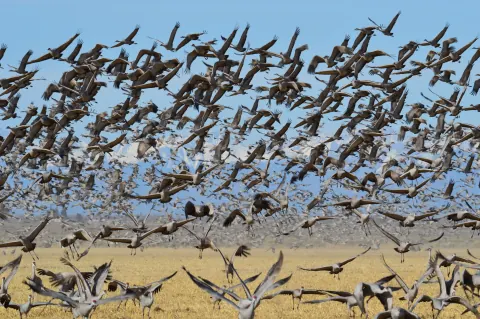
Managed wetlands on 14,804 acres in the San Luis Valley. In spring the refuge hosts about 95% of the Rocky Mountain population of greater sandhill cranes, 18,000–21,000 birds; migration peaks around the first week of March and the second week of October.
Dinosaur National Monument
The Yampa, "the only remaining free-flowing tributary in the Colorado River system," keeps remnant native cottonwood, willow and box elder streamside communities.
Medano Creek, Great Sand Dunes National Park and Preserve
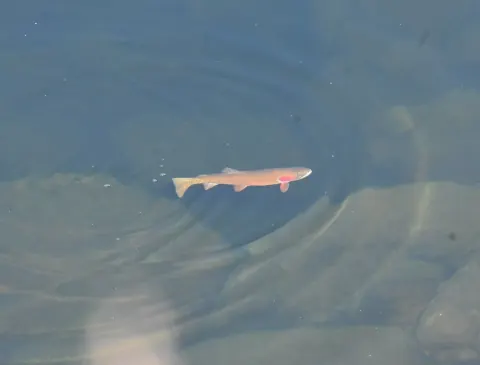
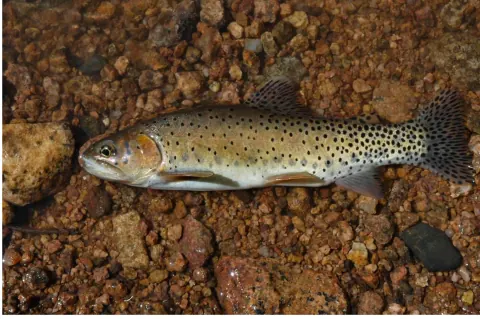
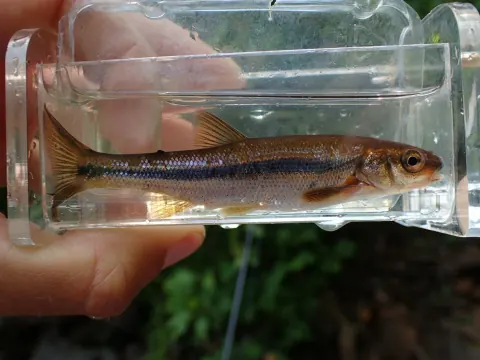
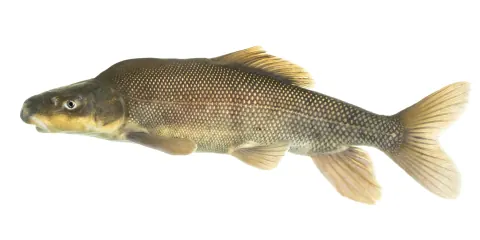
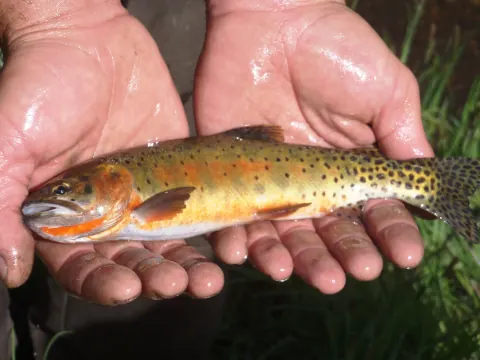
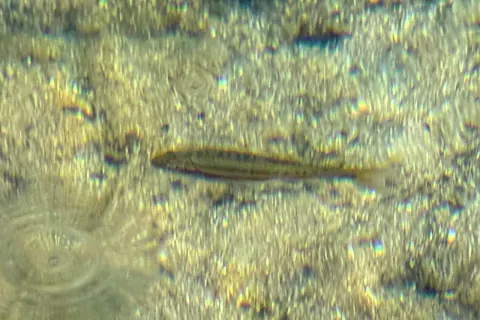
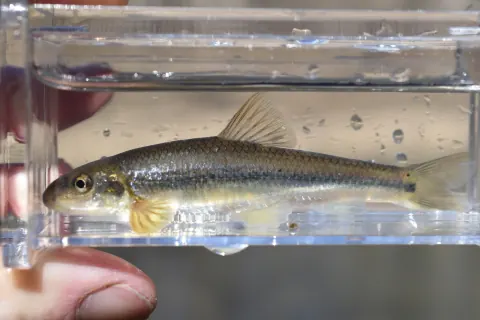
Rio Grande cutthroat trout and the endangered Rio Grande sucker live in the creek.
Species in this habitat (34)
- Photo: indianaspeciesfishing / iNaturalist — CC BY-NC 4.0
- Photo: Todd Harless / USFWS — Public Domain
- Photo: USFWS — Public DomainFeatured
- Photo: Dana Shellhorn / USFWS — Public Domain
- Photo: Gojilynx / iNaturalist — CC BY 4.0
- Photo: Joe Ferreira / USFWS — Public Domain
- Photo: Cody Stricker / iNaturalist — CC BY 4.0
- Photo: Henry Dennison / iNaturalist — CC BY-NC 4.0
- Photo: Jarrett Woodrow / USFWS — Public Domain
- Photo: Kate Miyamoto / USFWS — Public Domain
- Photo: Chris Kennedy / USFWS — Public Domain
- Photo: Grand Canyon National Park / NPS — Public Domain
- Photo: Michael Verdirame / iNaturalist — CC BY-NC 4.0
- Photo: Laurie Sheppard / USFWS — Public Domain
- Photo: Jim Hudgins / USFWS — Public Domain
- Photo: USFWS — Public Domain
- Photo: Tom Koerner / USFWS — Public DomainReintroduced
- Photo: Sam Stukel / USFWS — Public Domain
- Photo: Carter Dorscht / iNaturalist — CC0
- Photo: USFWS — Public Domain
- Photo: Tom Kennedy / iNaturalist — CC BY 4.0
- Photo: Robert Schorr / Colorado Natural Heritage Program — Public DomainFeatured
- Photo: Sam Stukel / USFWS — Public Domain
- Photo: Chris Kitcheyan / USFWS — Public Domain
- Photo: Pam Sponholtz / USFWS — Public Domain
- Photo: Terry Ireland / USFWS — Public Domain
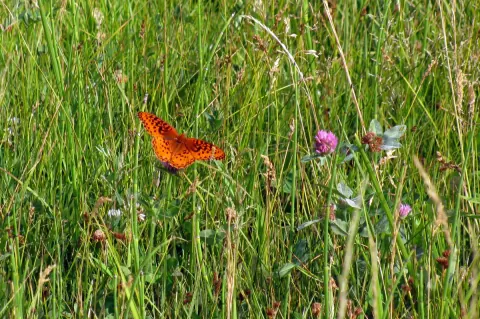
Silverspot Butterfly (Nokomis Fritillary)
Speyeria nokomis nokomis
invertebrate Wet Mountain Meadows - Photo: Conway Hawn / iNaturalist — CC0
- Photo: Dave Menke / USFWS — Public Domain
- Photo: ccarrollc1 / iNaturalist — CC BY-NC 4.0
- Photo: Pete Pattavina / USFWS — Public Domain
- Photo: Steve Hillebrand / USFWS — Public DomainRare Visitor
- Photo: Yianni Laskaris / USFWS — Public Domain
- Photo: Peter Pearsall / USFWS — Public Domain
See rivers, streams & wetlands in the explorer
Sources (8)
- Colorado State Forest Service, Riparian Forests
- Colorado Parks and Wildlife, Wetlands
- U.S. Fish and Wildlife Service, New Mexican meadow jumping mouse (Zapus hudsonius luteus)
- U.S. Fish and Wildlife Service, Critical habitat for the New Mexico meadow jumping mouse (81 FR 14264, 2016)
- U.S. Fish and Wildlife Service, Monte Vista National Wildlife Refuge
- Bock, Hadow and Somers (1971), Relations between Lewis' and Red-headed Woodpeckers in southeastern Colorado, Wilson Bulletin 83:237–248
- National Park Service, Dinosaur National Monument: Green and Yampa rivers
- National Park Service, Great Sand Dunes NP & Preserve: Natural features and ecosystems
Photo credits
- Rivers, Streams & Wetlands: NPS / Patrick Myers, Public domain