Overview
The bonytail is the rarest of the Colorado River’s endangered native fish, and no self-sustaining wild population exists. The species survives because hatcheries raise bonytail and stock them into the river system every year. Stocked bonytail have spawned in managed floodplain wetlands since 2015, but wild-born fish have not yet built a self-sustaining population.
The bonytail was listed as federally endangered in 1980 — among the earlier listings under the Endangered Species Act. It was once widespread through the warmwater reaches of the Colorado River basin, historically found from Wyoming to Mexico. It is the most imperiled of the basin’s four listed native fish (Colorado pikeminnow and bonytail are endangered; humpback chub has been threatened since 2021 and razorback sucker since 2026), and the only one with no established wild population.
This is what the complete transformation of the Colorado River system — from a warm, turbid, seasonally flooding desert river to a series of regulated, cold, clear reservoirs and controlled release channels — has produced. A fish that evolved over millions of years in one river system can no longer complete its life cycle in what remains of that system.
Natural History
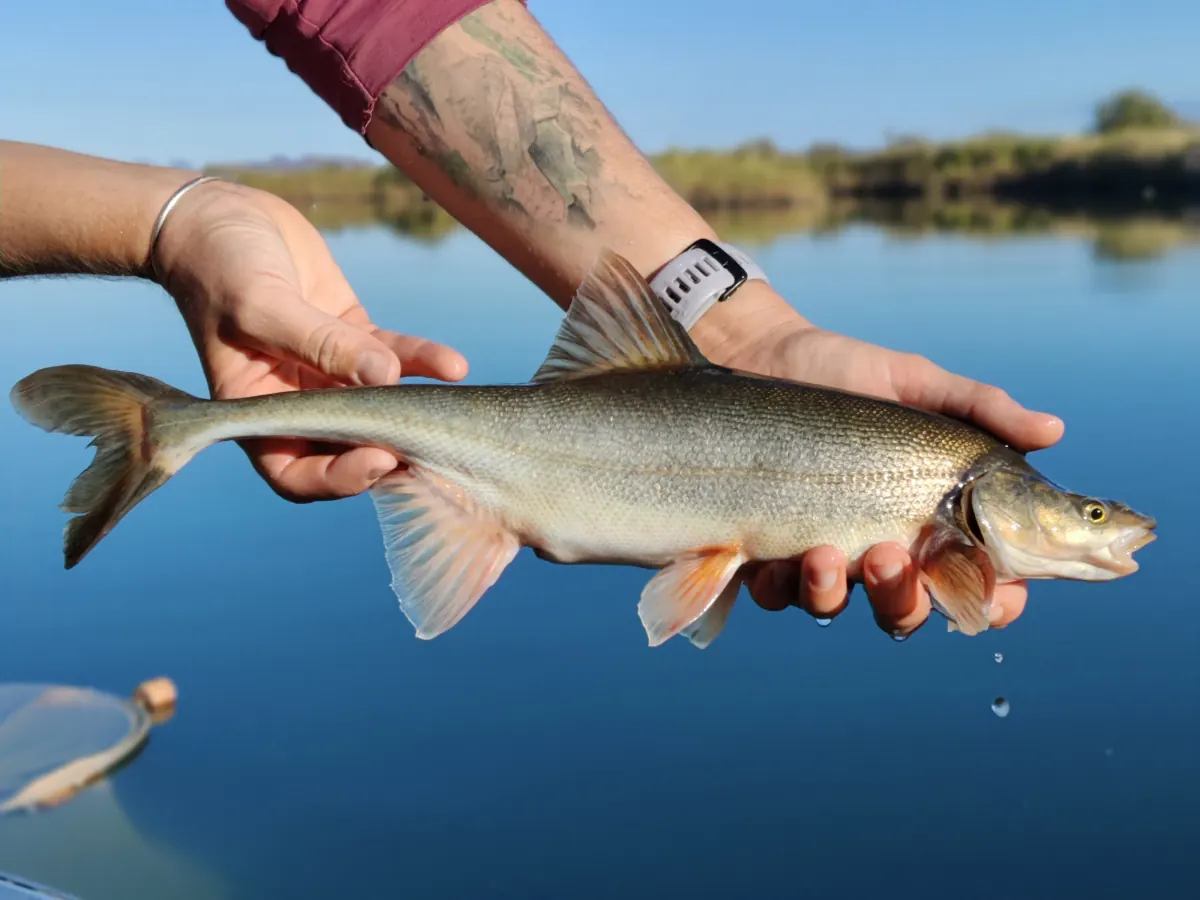
The bonytail chub (Gila elegans) is named for its dramatically narrowed caudal peduncle — the slender, almost stalk-like section of the body connecting the main body to the tail fin. This is not typical fish anatomy; it is an adaptation to the turbulent, high-velocity water of canyon reaches in the pre-dam Colorado River. The narrow peduncle, combined with the fish’s streamlined body and deeply forked tail, allowed it to hold position and maneuver in fast water in a way that body forms adapted to slower water cannot.
Adults reach about 22 inches (550 mm) and can live up to 50 years, an extraordinary lifespan for a minnow-family fish. The gray or olive back fades to silver sides and a white or cream belly. The large size and longevity of adult bonytail provided a buffer against poor recruitment years; adults that survived the annual hydrological cycle could hold territories and reproduce across decades of variable conditions. That buffering strategy is irrelevant when recruitment to the adult stage effectively does not occur.
Diet is broadly opportunistic — algae, detritus, aquatic invertebrates, and occasionally small fish. The species used canyon backwaters and eddies for resting and feeding, and occupied the deeper, swifter main channel portions of the river system during movement and spawning migrations.
Habitat in Colorado
The bonytail chub historically occupied the Colorado River mainstem and major tributaries through western Colorado — the canyon reaches of the Colorado River in Mesa and Garfield counties, and the warmer reaches of the Green and Yampa rivers in Moffat County. The Black Rocks reach of the Colorado River in western Colorado, now within McInnis Canyons National Conservation Area, was historically important bonytail habitat.
Hatchery-raised bonytail are stocked into the upper Colorado River basin, including Colorado reaches, as part of the Upper Colorado River Endangered Fish Recovery Program. Bonytail for Colorado stocking are raised at the U.S. Fish and Wildlife Service’s Ouray National Fish Hatchery–Grand Valley Unit near Grand Junction and at Colorado Parks and Wildlife’s J.W. Mumma Native Aquatic Species Restoration Facility in Alamosa.
Critical habitat was designated in 1994 on about 312 river miles in Colorado, Utah, Arizona, Nevada, and California.
Threats
Dam construction is the proximate cause of the bonytail’s functional extinction. The Colorado River’s transformation from a warm, turbid, seasonally flooding river to a series of regulated reservoirs and controlled releases eliminated the river conditions — warm water temperatures, seasonal flood pulses, turbid flows with suspended sediment, deep canyon pools with diverse hydraulic conditions — that the bonytail’s life history requires.
Nonnative fish predation and competition turned the regulated river into an environment where introduced species with which the bonytail did not coevolve now dominate. Channel catfish, striped bass, smallmouth bass, and other introduced species prey heavily on juvenile bonytail and compete with adults for food resources.
Flow alteration eliminated the seasonal hydrograph that bonytail reproduction is synchronized to. The species requires specific water temperature and flow conditions for spawning that are no longer present at the necessary times in regulated reaches.
Water diversions reduce the volume and velocity of water in lower reaches, further degrading the hydraulic conditions the species evolved to occupy.
Recovery & Conservation
The bonytail chub is part of the Upper Colorado River Endangered Fish Recovery Program — a cooperative recovery effort involving USFWS, Colorado Parks and Wildlife, the states of Colorado, Utah, and Wyoming, water users, and the Bureau of Reclamation. The program coordinates water management, nonnative fish control, and hatchery production across the upper basin.
Bonytail are raised at state and federal hatcheries in Colorado and Utah and stocked each year into the Colorado River system. Achieving the recovery goal of a self-sustaining wild population requires solving the problems of recruitment — not just stocking adult fish, but ensuring that eggs, larvae, and juvenile fish can survive in the river system without hatchery assistance. That challenge has not been fully met after decades of effort.
What You Can Do
- Report any unusual large native fish in the Colorado, Gunnison, Green, or Yampa rivers in Colorado to CPW. Bonytail sightings — or sightings of fish that might be bonytail based on the distinctive slender tail peduncle — are worth reporting with photographs.
- Support Upper Colorado River flow management that maintains the minimum flows and temperature regimes that native fish require.
- Avoid releasing any fish from other water bodies into Colorado River system waters. Nonnative introductions have been a significant factor in the decline of all four of the Upper Colorado River basin’s listed native fish.