Overview
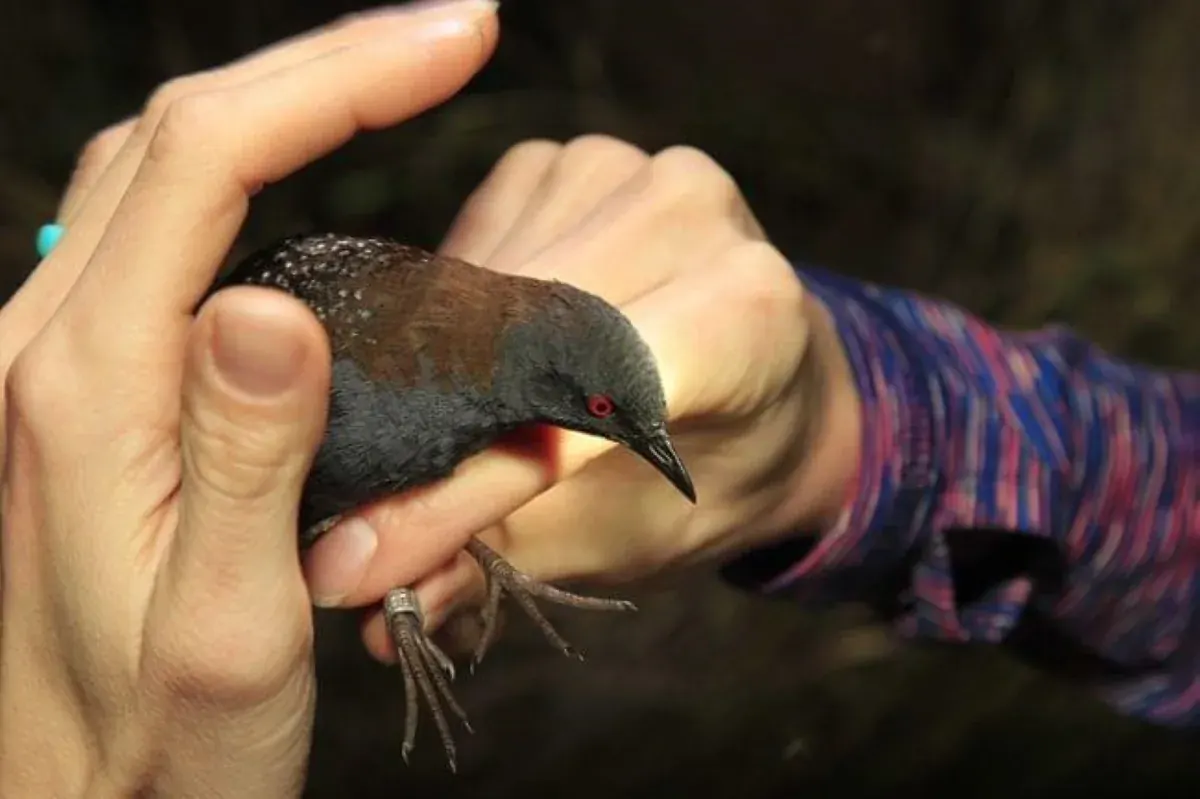
The eastern black rail is a bird most birdwatchers will never see. It is roughly the size of a house sparrow, dressed in slate-black plumage with a chestnut nape and flanks stippled with white spots — markings rendered invisible by the dense marsh vegetation it inhabits. It rarely leaves the interior of the wetland thickets where it lives, moving through the stems like a ghost. It is identified almost entirely by its call: a sharp, descending “kee-kee-kerr” that carries across a marsh at dusk and dawn, announcing the presence of a bird that may as well not exist for all the luck you’ll have locating it visually.
USFWS listed the eastern black rail as threatened in a rule published October 8, 2020, effective November 9, 2020. Range-wide, eastern black rail numbers have declined by more than 75 percent over the last 10 to 20 years — a collapse driven primarily by the systematic loss, alteration, and degradation of the shallow marshes and wet meadows this bird requires.
Colorado holds one of the few documented interior breeding populations, centered on cattail marshes of the lower Arkansas River Valley at sites such as Fort Lyon State Wildlife Area, John Martin Reservoir, Oxbow State Wildlife Area, and Bent’s Old Fort. It is not on Colorado’s state threatened or endangered list, but CPW considers it locally important in the Lower Arkansas River Basin.
Natural History
The eastern black rail is the smallest rail in North America — 10 to 15 centimeters in length, weighing about 29 to 35 grams. Its dark plumage absorbs rather than reflects light, and combined with its habit of moving through dense vegetative cover, the bird approaches functional invisibility in its preferred habitat. The ruby-red eye is the field mark that matters when you do get a view. The chestnut nape and white flecking on the flanks are secondary marks that confirm identity.
Rails as a family are built for moving through dense marsh. Their bodies are laterally compressed — the origin of the phrase “thin as a rail” — allowing passage through reeds and cattails that would impede a rounder bird. The black rail takes this adaptation to an extreme. It does not wade open water. It lives in the stems.
Diet consists of seeds, invertebrates, and small crustaceans gleaned from the marsh substrate and shallow water margins. Breeding pairs nest on or near the ground in dense marsh vegetation, constructing shallow cup nests above the waterline, sometimes with a woven canopy of bent stems, in sites that provide both concealment from predators and elevation above typical water levels. The requirement for adjacent upland refugia is significant: water level fluctuations that flood nesting sites without nearby higher ground are a documented cause of breeding failure.
Habitat in Colorado
In Colorado, black rails use extensive cattail marshes with shallow, stable standing water in the lower Arkansas River Valley, from Pueblo County east to Prowers County. Birds call from these marshes through the breeding season, which begins in mid-May.
Colorado holds one of the few documented interior breeding populations, centered on cattail marshes of the lower Arkansas River Valley at sites such as Fort Lyon State Wildlife Area, John Martin Reservoir, Oxbow State Wildlife Area, and Bent’s Old Fort. Elsewhere, the breeding population is concentrated along the Atlantic and Gulf coasts.
No critical habitat has been designated. USFWS found designation not prudent in 2020; a federal court vacated that finding in July 2025 and sent it back to the agency for reconsideration.
Threats
Wetland loss and degradation is the foundational threat. The continental loss of wetland habitat through draining for agriculture, development, and water diversion has eliminated the vast majority of shallow marsh habitat this species requires. Range-wide, Atlantic and Gulf coast tidal marshes — where the largest remaining breeding populations persist — are simultaneously being lost to sea level rise.
Water level fluctuation disrupts breeding. Artificial water level management, altered hydrology from upstream diversions, and drought-driven water level declines can flood or desiccate nest sites during the breeding season.
Invasive vegetation, particularly common reed (Phragmites australis), replaces diverse, low-growing marsh vegetation with dense monocultures unsuitable for black rail use.
Predation pressure from raccoons, mink, and other marsh predators is amplified by habitat fragmentation. Small, isolated marsh patches concentrate both rails and their predators in ways that intact marsh systems do not.
Fire suppression allows rank vegetation to develop in inland marsh habitats at the expense of the shorter, denser growth structure the species requires.
Recovery & Conservation
USFWS listed the eastern black rail as threatened in a rule published October 8, 2020, effective November 9, 2020. No critical habitat has been designated. USFWS found designation not prudent in 2020; a federal court vacated that finding in July 2025 and sent it back to the agency for reconsideration. USFWS released a draft recovery plan in August 2025. A species status assessment completed prior to listing documented the population decline and identified water management, habitat restoration, and climate adaptation as the primary recovery needs.
The species is difficult to detect even where present, and absence from survey areas does not reliably indicate absence of the bird. Systematic survey protocols used by trained surveyors have improved detection rates, but generating accurate population estimates across the range remains challenging.
For Colorado, conservation value lies in maintaining and improving the quality of the Arkansas Valley cattail marshes that support the state’s breeding birds.
What You Can Do
- Learn the call. The “kee-kee-kerr” call is the only reliable way to detect this species in the field. Cornell Lab’s All About Birds website has recordings. Listen at night from May through July at Arkansas Valley wetlands, from public roads and trails. Never use playback, which can disturb this federally threatened bird.
- Report detections to CPW and eBird; eBird automatically hides locations of sensitive species. Written call descriptions are also valuable.
- Support wetland conservation in the lower Arkansas River Valley through local land trusts, water conservancy districts, and CPW wetland programs.
- Keep dogs leashed and minimize disturbance at wetland edges during the breeding season.