Reintroduced Species in Colorado
Colorado has brought back four animals that had disappeared from the state: the gray wolf, the Canada lynx, the black-footed ferret, and the river otter. Otters were reintroduced from 1976 to 1991, lynx between 1999 and 2006, ferrets have been released since 2001, and wolves since December 2023. A wolverine return is planned: CPW released a Wolverine Restoration Plan in January 2026, but no wolverines have been released yet.
At a glance
| Species | Federal status | Colorado status | First Colorado release | Where |
|---|---|---|---|---|
| Gray Wolf | Threatened (10(j) experimental population) | State endangered | 2023 | Grand and Summit counties (2023); Eagle and Pitkin counties (2025) |
| Canada Lynx | Threatened | State endangered | 1999 | San Juan Mountains |
| Black-footed Ferret | Endangered | State endangered | 2001 | Wolf Creek and Coyote Basin (Rio Blanco and Moffat counties); later the eastern plains and Front Range |
| North American River Otter | Not listed | State threatened | 1976 | Cheesman Reservoir, Gunnison, Piedra, upper Colorado (Rocky Mountain NP) and Dolores rivers |
| North American Wolverine Return Planned | Threatened | State endangered | Not yet | Planned zones: north of I-70 including Rocky Mountain National Park, the Elk and West Elk mountains, and the San Juans |
Gray Wolves in Colorado
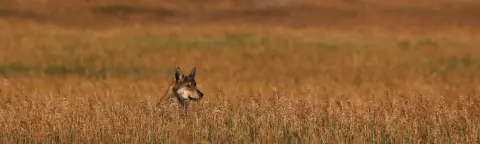
Wolves were eliminated from Colorado by the 1940s through hunting, trapping, and poisoning.
Colorado voters approved Proposition 114 in November 2020, directing CPW to restore and manage gray wolves by the end of 2023. CPW released ten wolves from Oregon between December 18 and 22, 2023, in Grand and Summit counties, and 15 more wolves from British Columbia in January 2025, in Eagle and Pitkin counties.
In 2024, the Copper Creek pack produced Colorado's first wild-born pups in about eight decades. By March 2026 CPW counted at least 32 wolves, including four packs, and in July 2026 it confirmed a fifth pack, Piney Ridge, in Eagle County. Colorado's wolves are a 10(j) nonessential experimental population, treated as threatened.
Canada Lynx in Colorado
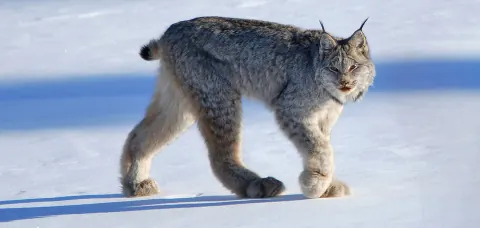
The Canada lynx was gone from Colorado by about 1973 through trapping, prey depletion, and habitat loss.
Between 1999 and 2006, the Colorado Division of Wildlife (now Colorado Parks and Wildlife) reintroduced 218 lynx from Canada and Alaska into the San Juan Mountains. Breeding was first confirmed in 2003, and CPW declared the reintroduction a success in 2010.
CPW estimates Colorado's population at 75 to 100 lynx, with the San Juan Mountains holding the core of it. Snowpack loss and climate change pose the most significant long-term threat to Colorado's lynx.
Black-Footed Ferrets in Colorado
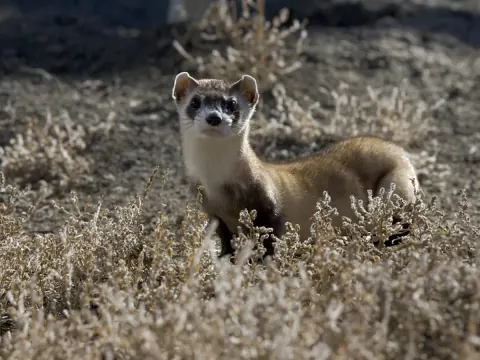
The black-footed ferret was presumed extinct in 1979 and rediscovered two years later in Meeteetse, Wyoming. Ferrets live almost entirely on prairie dogs, and an estimated 95 percent of historical prairie dog habitat across the West has been eliminated.
Colorado has been a reintroduction state since 2001 and has released more than 500 ferrets. The state's first releases were at Wolf Creek and Coyote Basin in Rio Blanco and Moffat counties, where 260 ferrets were released between 2001 and 2008 before plague ended the effort. A 2013 state law allowing releases on private land under Safe Harbor agreements moved the program to the eastern plains and Front Range.
Release sites since then include Rocky Mountain Arsenal National Wildlife Refuge, the City of Fort Collins' Soapstone Prairie Natural Area, Walker Ranch and the Pueblo Chemical Depot in Pueblo County, and private ranches in Prowers and Baca counties. Plague collapsed prairie dog colonies at several eastern-plains sites in the mid-2010s, and CPW does not publish a statewide ferret count.
River Otters in Colorado
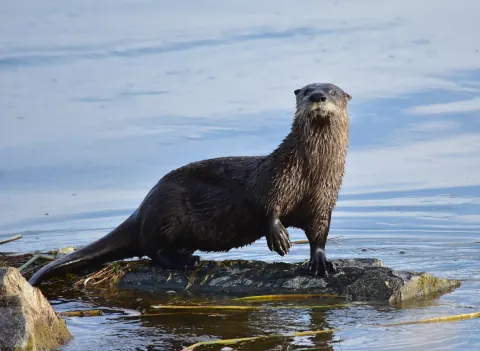
Unregulated trapping for the fur trade, water pollution and habitat loss wiped river otters out of Colorado; the last confirmed native otter was taken in the lower Yampa canyon around 1906–1909.
From 1976 to 1991, Colorado released about 120 otters at five sites: Cheesman Reservoir on the South Platte, the Gunnison River, the Piedra River, the upper Colorado River in Rocky Mountain National Park, and the Dolores River. Most came from Wisconsin, Minnesota and Oregon.
Otters now have breeding populations in many parts of the state, mainly on the Western Slope, but there is no statewide population estimate. CPW's Otter Y.E.A.R. survey, launched April 13, 2026, invites the public to report otters, tracks and scat through iNaturalist.
Wolverines in Colorado
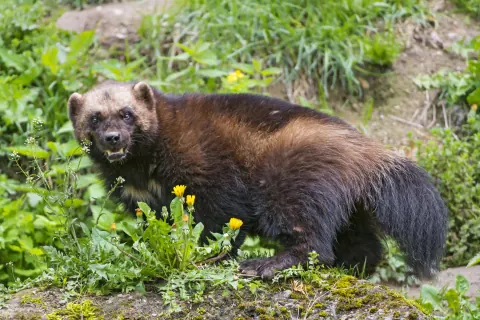
Poisoning, trapping, and unregulated killing eliminated wolverines from Colorado; the last confirmed record before M56 was in 1919. M56, a collared male who walked from Wyoming into north-central Colorado in 2009, is the only wolverine confirmed in the state since then.
Colorado passed Senate Bill 24-171 in May 2024, authorizing CPW to reintroduce wolverines to the state. On January 15, 2026, CPW released a Wolverine Restoration Plan for the release of up to 45 wolverines, up to 15 per winter over three or more winters.
No wolverines have been released yet. A federal 10(j) nonessential experimental population rule is required before the first release, and as of September 2026 none has been proposed.
What reintroduction means
Reintroduction means returning a species to places where it once lived, usually by moving animals from healthy populations elsewhere or from captive breeding. Releasing animals is only the beginning. For a population to last, it needs enough suitable habitat, and the people who live and work alongside it have to accept it.
Frequently asked questions
- Are there wolves in Colorado?
- Yes. CPW released ten wolves from Oregon in December 2023 and 15 more from British Columbia in January 2025. By March 2026 CPW counted at least 32 wolves, including four packs, and it confirmed a fifth pack in July 2026.
- Are there lynx in Colorado?
- Yes. Between 1999 and 2006, 218 lynx from Canada and Alaska were reintroduced into the San Juan Mountains, and CPW estimates Colorado's population at 75 to 100 lynx.
- Are there river otters in Colorado?
- Yes. River otters now have breeding populations in many parts of the state, mainly on the Western Slope, and have spread into rivers such as the Yampa, Green, Roaring Fork, Eagle, Blue and Fraser. There is no statewide population estimate; CPW's Otter Y.E.A.R. survey, launched April 13, 2026, is collecting sightings through iNaturalist.
- Have wolverines been released in Colorado?
- No. CPW's January 2026 Wolverine Restoration Plan calls for the release of up to 45 wolverines, but as of September 2026 no wolverines have been released. A federal 10(j) nonessential experimental population rule is required before the first release.
- Where were black-footed ferrets released in Colorado?
- The first releases, between 2001 and 2008, were at Wolf Creek and Coyote Basin in Rio Blanco and Moffat counties. Since a 2013 state law, ferrets have been released at Rocky Mountain Arsenal National Wildlife Refuge, Soapstone Prairie Natural Area, Walker Ranch and the Pueblo Chemical Depot in Pueblo County, and private ranches in Prowers and Baca counties.
- Are these animals still endangered?
- All of them are still protected. The black-footed ferret is federally endangered; the gray wolf, Canada lynx and North American wolverine are federally threatened; the river otter is not federally listed. Colorado's wolves are a 10(j) nonessential experimental population, treated as threatened. Colorado lists the gray wolf, Canada lynx, black-footed ferret and North American wolverine as state endangered and the river otter as state threatened.