Overview
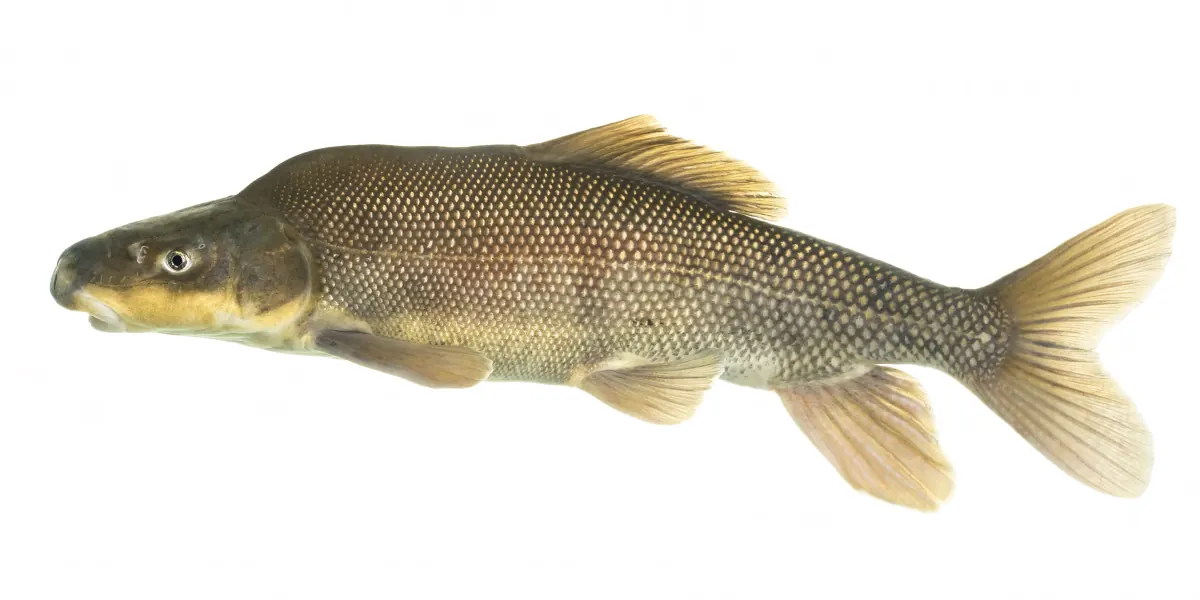
The razorback sucker carries a sharp, bony keel rising behind its head, a feature that gives the species its name. This structure appears to be a hydrodynamic adaptation for holding position in fast water, though its exact function is still incompletely understood. What is clear is that it evolved over millions of years in the Colorado River basin, and the fish that carries it has been in serious decline for most of the 20th century.
The razorback sucker is one of the endemic big-river fishes of the Upper Colorado River basin managed by the Upper Colorado River Endangered Fish Recovery Program — a river that has been more thoroughly altered than almost any comparable waterway in North America. The species was listed as federally endangered in 1991 and reclassified to threatened in 2026, after hatchery stocking and habitat work rebuilt several populations. Like the bonytail chub, it still depends heavily on hatchery supplementation; wild recruitment is documented but limited.
In Colorado, key areas include the Colorado River in the Grand Valley, the lower Gunnison River, and the lower Yampa River near its confluence with the Green in Dinosaur National Monument.
Natural History
The razorback sucker (Xyrauchen texanus) is one of the largest suckers in North America — documented to 36 inches (90 centimeters) in length and capable of living 40 or more years. The body is robust and laterally compressed, dark olive-green above with a yellow or orange-yellow belly. The distinctive bony keel behind the head gives the fish a cross-sectional profile unlike anything else in the basin’s fauna.
Adults are suction feeders, using the inferior (downward-facing) mouth characteristic of suckers to vacuum algae, detritus, and invertebrates from the river substrate. The species is a long-distance migrant during the spawning season, moving from wintering areas in deep pools to spawning sites on gravel bars and cobble in warm, fast-water reaches.
Longevity is a double-edged adaptation. A fish that lives 40 years in a stable river system can weather bad recruitment years and recover from episodic population crashes. A fish that lives 40 years in a system where juvenile survival is near zero maintains a population of old fish without a future. Monitoring shows Colorado’s populations are made up mostly of stocked fish, with limited evidence of natural recruitment.
Habitat in Colorado
In western Colorado the razorback sucker uses the Colorado, Gunnison, Green, lower Yampa, and White rivers. In Colorado, key areas include the Colorado River in the Grand Valley, the lower Gunnison River, and the lower Yampa River near its confluence with the Green in Dinosaur National Monument.
Large backwaters, slow-water side channels adjacent to main channel habitat, and flooded bottomlands during high water are used as rearing habitat by juvenile fish. These habitat elements — which dams and channelization have systematically eliminated from most of the Colorado basin — are disproportionately important for juvenile survival and remain rare in the upper basin landscape.
Hatchery-raised razorback suckers are stocked into the Colorado, Gunnison, and Green rivers as part of the Upper Colorado River Endangered Fish Recovery Program. They are raised at the Ouray National Fish Hatchery’s two units: Randlett, near Vernal, Utah, and the Grand Valley Unit near Grand Junction, which includes the Horsethief Canyon Native Fish Facility.
Threats
Nonnative fish predation is the dominant ongoing threat to wild recruitment. Channel catfish, striped bass, smallmouth bass, and other introduced species prey heavily on razorback sucker larvae, juveniles, and small adults in ways that effectively prevent natural recruitment from closing the population gap. The razorback sucker evolved without these predators; its behavior and early life history provide no defenses against them.
Dam construction eliminated the seasonal flood pulses, warm temperatures, and sediment-laden water that razorback sucker reproduction requires, and fragmented the river into isolated reaches preventing the migrations the species needs.
Flow alteration from dam releases and diversions has changed the timing, magnitude, and temperature of flows in ways that disrupt spawning cues and eliminate the floodplain inundation that provides larval rearing habitat.
Hybridization with nonnative white sucker is a recognized genetic concern.
Recovery & Conservation
The razorback sucker is a core focus species of the Upper Colorado River Endangered Fish Recovery Program. The species was listed as federally endangered in 1991 and reclassified to threatened in 2026, after hatchery stocking and habitat work rebuilt several populations. Annual hatchery stocking continues to supplement populations while research continues on the fundamental challenge of improving wild recruitment.
In the Green River, stocking has rebuilt the population to roughly 36,000 adults, up from about 100 wild fish in the late 1990s, though natural recruitment remains rare.
The Recovery Program has acquired stored water to boost late-summer Yampa River flows, and dam operators have changed release patterns on the Gunnison to benefit native fish.
What You Can Do
- Report large, unusual suckers in the Colorado, Gunnison, Yampa, or Green rivers in Colorado to CPW. The razorback’s distinctive keel makes adults identifiable with a good look.
- Support instream flow protection for the Yampa River. The Yampa’s relatively natural flow regime is one of the razorback’s most important habitat assets in Colorado.
- Follow all fishing regulations in Upper Colorado River tributaries, including any nonnative fish retention requirements that support native fish management.
- Support the Upper Colorado River Endangered Fish Recovery Program through advocacy for the water management framework that makes recovery possible.