Overview
The least tern is North America’s smallest tern. It was taken off the federal endangered list in 2021 but is still state endangered in Colorado, where it nests at only a few reservoirs on the lower Arkansas River.
In Colorado, the least tern is State Endangered and a Tier 2 Species of Greatest Conservation Need. NatureServe ranks the interior least tern G4T3Q, and S1B in Colorado, meaning it is critically imperiled as a breeding bird here.
The interior population was listed as endangered under the federal Endangered Species Act on May 28, 1985, when fewer than 2,000 birds remained. By the time it was delisted in 2021, there were more than 18,000 birds at more than 480 nesting sites in 18 states, including Colorado.
Natural History
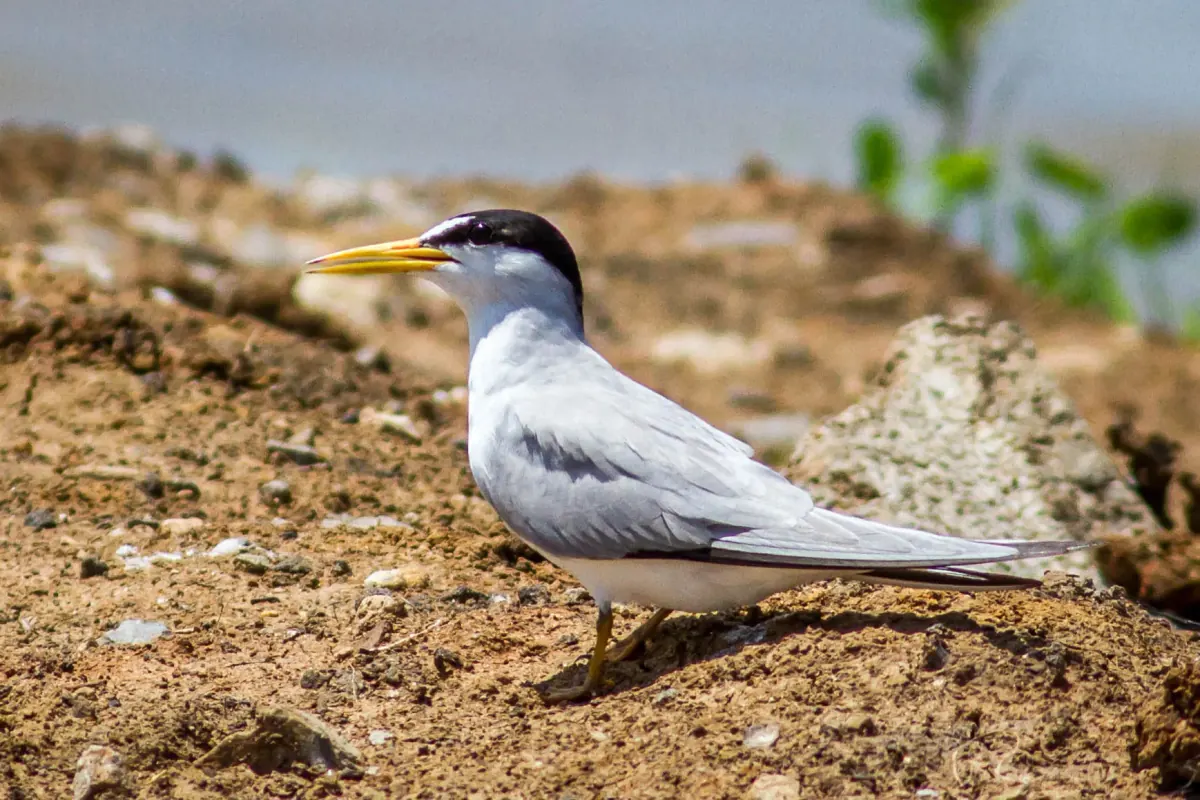
Least terns are about 8 to 9 inches long, with a wingspan of about 20 inches. In breeding plumage they have a black cap, a white forehead, and a yellow bill with a black tip.
They dive for small fish 1 to 4 inches long.
Least terns nest in colonies, laying their eggs in shallow scrapes on bare sand or gravel. A clutch is typically 2 or 3 eggs. The eggs are incubated for about three weeks, and the chicks can fly at about three weeks old. Banded birds have lived more than 20 years.
Adults arrive in Colorado in mid-May. Least terns winter along the coasts of the Gulf of Mexico, the Caribbean, and Central and South America.
Habitat in Colorado
In Colorado, least terns breed only in the lower Arkansas River basin.
Colorado Parks and Wildlife posts seasonal shoreline closures at John Martin, Adobe Creek (Blue Lake) and Neegronda reservoirs from early April to mid-August. The closures use signs, buoys and temporary fencing. People can be cited for entering closed areas or for letting dogs off leash.
Nee Noshe Reservoir was a historical nesting site.
Colorado’s first breeding bird atlas (1987–94) confirmed least tern breeding at three locations. The second atlas (2007–11) confirmed breeding in only two survey blocks.
Primary Threats
River flows
CPW notes that regulated Arkansas River flows likely keep terns from nesting successfully on river sandbars.
Predators, disturbance and water levels
Tern colonies are also vulnerable to predators, disturbance, and changing reservoir levels.
Drought
In 2026, drought dried much of Nee Noshe Reservoir. How that affects nesting terns is not yet known.
Recovery & Conservation
Federal listing and delisting
The interior population of the least tern was listed as endangered on May 28, 1985, when fewer than 2,000 birds remained. The U.S. Fish and Wildlife Service removed it from the federal list in a final rule published January 13, 2021, which took effect February 12, 2021. At that point there were more than 18,000 birds at more than 480 nesting sites in 18 states, including Colorado.
Still protected
Least terns remain protected under the Migratory Bird Treaty Act. The California least tern is still federally listed.
Monitoring
USFWS must monitor the interior population for at least five years after delisting.
In Colorado
The least tern remains State Endangered in Colorado. Each nesting season, CPW closes parts of the shorelines at John Martin, Adobe Creek and Neegronda reservoirs from early April to mid-August to protect nesting birds.
What You Can Do
- Respect the closures. Stay out of posted shoreline closures at lower Arkansas River reservoirs.
- Keep dogs leashed at reservoirs.
- Watch from a distance.
- Report sightings to eBird.
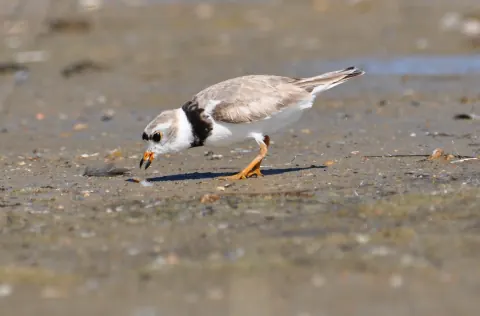
- Explore related species. Read the piping plover profile.
Sources
- Colorado Parks and Wildlife, least tern species page
- CPW species profile: least tern (Colorado Natural Heritage Program)
- Federal Register (2021), removal of the interior least tern from the federal list
- USFWS (2021), recovery of America’s smallest tern
- NatureServe Explorer, interior least tern
- Colorado Outdoors (2020), shoreline closures protect rare birds
- Kiowa County Press, temporary shore closures at John Martin Reservoir
- NBC Palm Springs (2026), emergency fish salvage at Nee Noshe Reservoir
- Audubon Guide to North American Birds, least tern