Overview
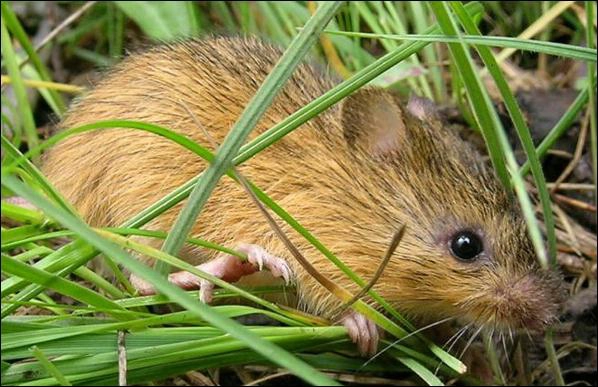
The New Mexico meadow jumping mouse is a small, specialized rodent that most Coloradans have never heard of and that lives in some of the most beautiful meadow and stream habitat in the southern Rockies. It is a subspecies of the meadow jumping mouse — a mouse so different from the standard small-rodent body plan that seeing one clearly, if you’re lucky enough to manage it, registers as unusual: a tiny animal with a very long tail and hind legs built for jumping, not running.
In Colorado, this mouse exists in a narrow geographic foothold — small, isolated populations along the Florida River and Sambrito Creek in the San Juan River basin, and in Sugarite Canyon on the New Mexico border. This is the northernmost extent of its range, which extends through New Mexico and into eastern Arizona. It is not on Colorado’s state endangered list; CPW lists it as a Tier 1 Species of Greatest Conservation Need.
USFWS published the final rule listing the New Mexico meadow jumping mouse as endangered on June 10, 2014; it took effect July 10, 2014. It has the unfortunate distinction of having its greatest threat originate in one of the most common and culturally embedded land uses in the Colorado mountains: cattle grazing. Cattle in riparian meadows eat the tall, dense herbaceous vegetation that the mouse requires for cover, nesting, and foraging, and the management solution — excluding cattle from the most sensitive streamside areas — involves persuading the ranching operations that use these areas to change their grazing patterns.
Natural History
The New Mexico meadow jumping mouse (Zapus hudsonius luteus) is a subspecies of the meadow jumping mouse, a North American mouse in the family Dipodidae — the jumping mice and jerboas. Adults are 6 to 9 centimeters in body length with a tail that adds 11 to 16 centimeters more — longer than the body. The hind legs are noticeably longer and more powerful than the forelimbs, reflecting the jumping locomotion the species uses when alarmed. In normal movement, it walks and forages; when startled, it jumps.
Coloration is a dark, yellowish-brown dorsal stripe running from head to tail base, flanked by paler yellowish-brown sides, and a white or cream belly. The distinctive long tail is bicolored — darker above, paler below.
The species hibernates for approximately eight to nine months of the year — longer than most other mammals. The active season is very brief: typically June through August, with individuals emerging, breeding, weaning young, accumulating fat reserves, and returning to hibernation in roughly 10 to 12 weeks. The tight seasonal window means any disruption during the active period — a late spring flood, extended drought, grazing that depletes food resources — directly impacts reproduction and survival.
Diet during the active season includes seeds, invertebrates, fungi, and various plant materials available in the riparian meadow. Fat accumulation before hibernation is critical; individuals that do not achieve adequate fat reserves before autumn may not survive the winter.
Habitat in Colorado
Colorado’s populations are associated with riparian meadows along San Juan River tributaries (the Florida River and Sambrito Creek) and in Sugarite Canyon near Raton Pass. The subspecies occurs from about 4,500 to 9,500 feet across its range; Colorado’s Sambrito Creek site is a low-elevation foothill stream.
The vegetation requirement is specific: tall, dense herbaceous cover. The mouse requires streamside areas where grasses, sedges, forbs, and low shrubs create a dense, structurally complex layer averaging at least 24 inches high throughout the brief active season. This vegetation provides cover from predators, nesting material, and foraging opportunities. Riparian areas with unrestricted cattle access are typically identifiable by the absence of tall herbaceous cover — grazed to short, sparse condition that provides neither concealment nor the food resources the mouse requires.
Critical habitat, designated in March 2016, covers about 13,973 acres along 169 miles of streams in eight units across Colorado, New Mexico, and Arizona.
Threats
Livestock grazing in riparian zones is the primary threat in Colorado. Cattle grazing in and adjacent to streamside meadows removes the tall herbaceous cover the mouse requires for nesting and foraging. Heavily grazed riparian areas may lack adequate vegetation to support the mouse even if the species is otherwise present. The management response — fencing that excludes cattle from streamside areas — is technically straightforward and has been implemented at some occupied sites, but requires ongoing cooperation with the ranching operations that use these areas.
Drought reduces streamside soil moisture, stressing the riparian vegetation that provides cover and food, and can reduce stream flows enough to alter the character of the wet meadow habitats the mouse depends on.
Water diversion that reduces streamflow in occupied drainages can dry out riparian meadow habitats, reducing their productivity and carrying capacity.
Wildfire is an acute risk in the dry landscape surrounding occupied habitats. High-severity fire reaching streamside meadow areas can eliminate cover vegetation and directly expose populations. Recovery of burned streamside vegetation may take several years.
Climate change threatens to reduce the snowpack that sustains the late-spring and summer soil moisture conditions in riparian meadows, intensify drought periods, and alter the timing of stream flows in ways that affect streamside vegetation quality.
Floods, highway reconstruction, recreation, and the loss of beaver-created wetlands also degrade habitat.
Recovery & Conservation
USFWS published the final rule listing the New Mexico meadow jumping mouse as endangered on June 10, 2014; it took effect July 10, 2014. Critical habitat, designated in March 2016, covers about 13,973 acres along 169 miles of streams in eight units across Colorado, New Mexico, and Arizona. USFWS finalized a recovery plan in January 2023.
Recovery actions focus on managing livestock access to occupied habitat — through grazing plan modifications, fencing, and water development that redirects cattle away from sensitive streamside areas — and monitoring population status across the occupied sites. CPW, USFWS, the Southern Ute Indian Tribe, and other partners cooperate on managing occupied streamside habitat in southern Colorado.
The short active season and narrow geographic range make the subspecies vulnerable to population-level events, and monitoring is important for detecting decline before it advances to irreversible levels.
What You Can Do
- Report observations of jumping mice — small mice with very long tails that jump when flushed — in riparian meadows of southern Colorado to CPW. The extremely long tail makes identification to the genus level possible in the field.
- Support livestock exclusion fencing projects in occupied riparian areas of southern Colorado. The most direct and proven management tool for this species is fencing that keeps cattle out of sensitive streamside habitats.
- Support riparian habitat conservation in the San Juan River basin and Sugarite Canyon through organizations working on voluntary grazing management improvements and streamside protection.
- Follow Leave No Trace principles in riparian meadow areas of southern Colorado, particularly during June and July when the mouse’s active season coincides with peak hiking and camping activity.