Overview
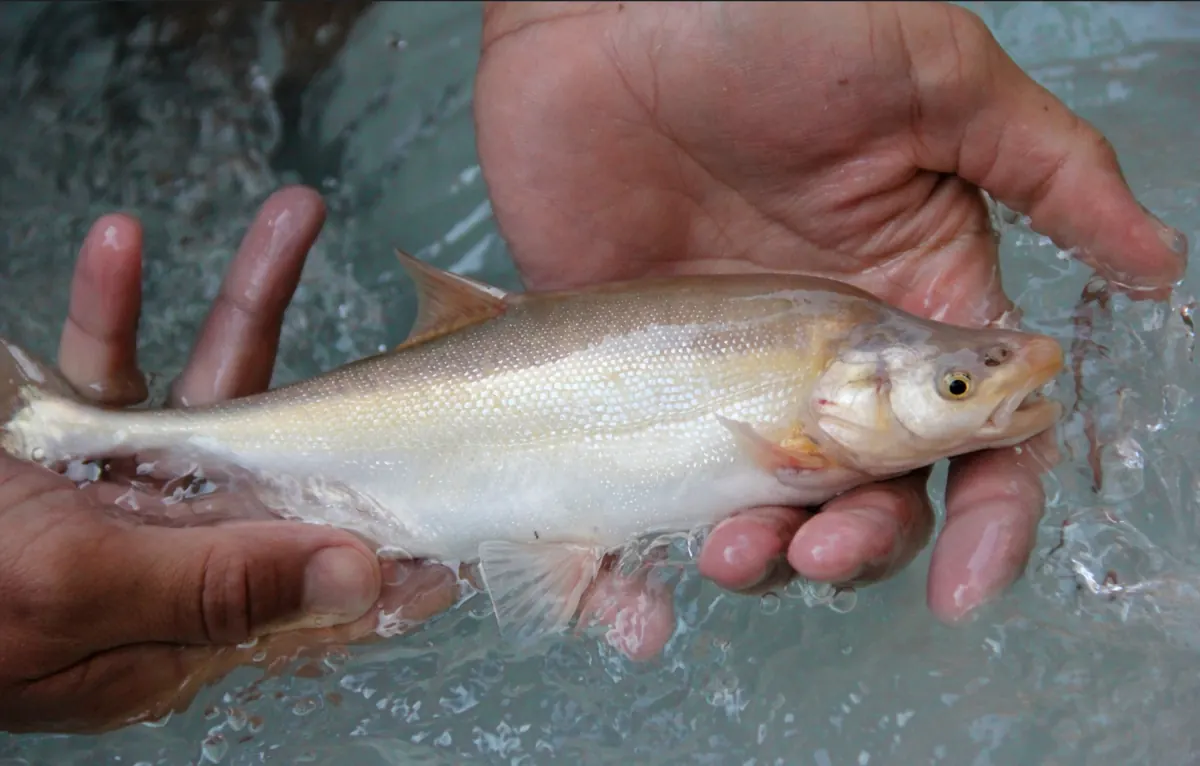
The humpback chub carries its name in its anatomy. The pronounced hump behind the head, more extreme than in its chub relatives, defines the species. It was formally described in 1946. It lives in some of the most turbulent whitewater in North America: the swift, churning canyon reaches of the Colorado River where the river is compressed between canyon walls and turned into continuous hydraulic chaos.
The humpback chub was listed as endangered in 1967, one of the earliest fish listings under precursor legislation to the Endangered Species Act. In October 2021, USFWS reclassified it as threatened, effective November 17, 2021. A 4(d) rule accompanied the change and exempts recovery work such as nonnative fish removal and stocking. This is one of the few conservation success stories from the Colorado River basin, and it is worth understanding clearly: downlisting is not delisting, the species remains far from historical abundance, and the threats that drove the original listing have not been eliminated.
In Colorado, the species survives in the Black Rocks reach of the Colorado River near the Utah line. It once lived in the Yampa River in Dinosaur National Monument but has been gone there since 2006.
Natural History
The humpback chub (Gila cypha) is a medium-sized cyprinid, reaching about 48 centimeters (19 inches) in length. The hump behind the head is its most distinctive external feature and its most debated one. Proposed functions include hydrodynamic lift in fast water, which would allow the fish to maintain position in high-velocity current without constant muscular effort; disruption of predator attack geometry; or a structural feature whose primary function is still inadequately understood. Biologists disagree about the mechanism, but the hump’s correlation with life in fast whitewater is consistent.
The body is otherwise streamlined — a fish built for fast water, with large paired fins and a strongly forked tail that provide stability and maneuverability in turbulent conditions. Coloration is gray-olive above with silver sides. Adults can live 20 to 40 years.
Diet is broadly opportunistic — aquatic invertebrates, algae, terrestrial insects, and whatever the river delivers. The humpback chub is not a dietary specialist; it evolved in a highly variable river system and processes the diverse food resources that turbulent water concentrates in backwaters and eddies.
Spawning occurs in spring, with water temperature and flow conditions triggering spawning behavior. The fish’s reproductive requirements, like those of all the Upper Colorado River native fish, are closely synchronized to the natural flow regime — a synchronization that regulated releases from dams disrupt.
Habitat in Colorado
The Black Rocks reach of the Colorado River in Mesa County is the only place humpback chub still live in Colorado, with about 430 adults in 2016–17. Westwater Canyon, just downstream in Utah, holds the largest upper-basin population, about 3,300 adults.
These reaches retain warm water temperatures because they are located below the confluence of the Gunnison River and above Lake Powell, limiting the thermal impact of cold dam releases on this stretch. Warm water is not incidental for the humpback chub; it is essential. Cold water from dam releases in other parts of the system reduces the metabolic activity and competitive ability of native warm-water fish while favoring cold-adapted nonnative species like rainbow trout.
Critical habitat has been designated in the Black Rocks reach (and Westwater Canyon, just across the Utah line), as well as in the Grand Canyon and other key sites across the range.
Threats
Cold water releases from dams upstream and downstream alter the thermal regime of the river in ways that harm humpback chub physiology and competitive ability while benefiting nonnative cold-water species. Temperature of Glen Canyon Dam releases has been a central issue in Grand Canyon humpback chub recovery.
Nonnative fish predation, particularly from rainbow trout, channel catfish, and other introduced species, reduces juvenile humpback chub recruitment. The Grand Canyon’s population recovery has been closely tied to nonnative trout management in the river.
Smallmouth bass began passing Glen Canyon Dam around 2022. USGS calls them the greatest threat to the Grand Canyon population; cool-water flow releases and removal efforts have so far pushed them back.
Flow alteration from dam regulation eliminates the seasonal flood pulses that native fish reproduction is synchronized to, alters the hydraulic conditions in canyon reaches, and affects the sediment transport that maintains the gravel bars and turbid-water conditions the humpback chub evolved with.
Dam construction fragmented the river system and altered the conditions of entire river reaches, creating physical barriers to fish movement and eliminating the connected river that the species historically occupied from Colorado to the Gulf of California.
Recovery & Conservation
The 2021 downlisting of the humpback chub from endangered to threatened represents genuine recovery progress. Grand Canyon numbers have surged since about 2010, helped by nonnative fish removal and warmer releases from Glen Canyon Dam as Lake Powell dropped.
The Upper Colorado River Endangered Fish Recovery Program continues to monitor and manage humpback chub populations across the range. The Black Rocks reach (and Westwater Canyon, just across the Utah line) receive monitoring attention and benefit from the broader water management framework the program has established.
The 2021 downlisting is a conservation milestone. It is also a reminder that it required more than 50 years of federal protection and substantial sustained recovery investment to achieve.
What You Can Do
- Report humpback chub observations from the Colorado River in western Colorado to CPW. The distinctive hump makes adults identifiable by careful observers. The fish is federally protected; any humpback chub caught must be released immediately.
- Support warm instream flows in the Colorado River through Upper Colorado basin water management. Minimum flow and temperature standards in the Black Rocks reach (and Westwater Canyon, just across the Utah line) are essential for maintaining these populations.
- Support temperature management of dam releases that protect warm-water conditions in native fish habitat — a technically complex water management issue that the Upper Colorado River Recovery Program actively works on.
- Follow all fishing regulations in the Black Rocks reach, including any restrictions on nonnative fish retention that support native fish management.