Overview
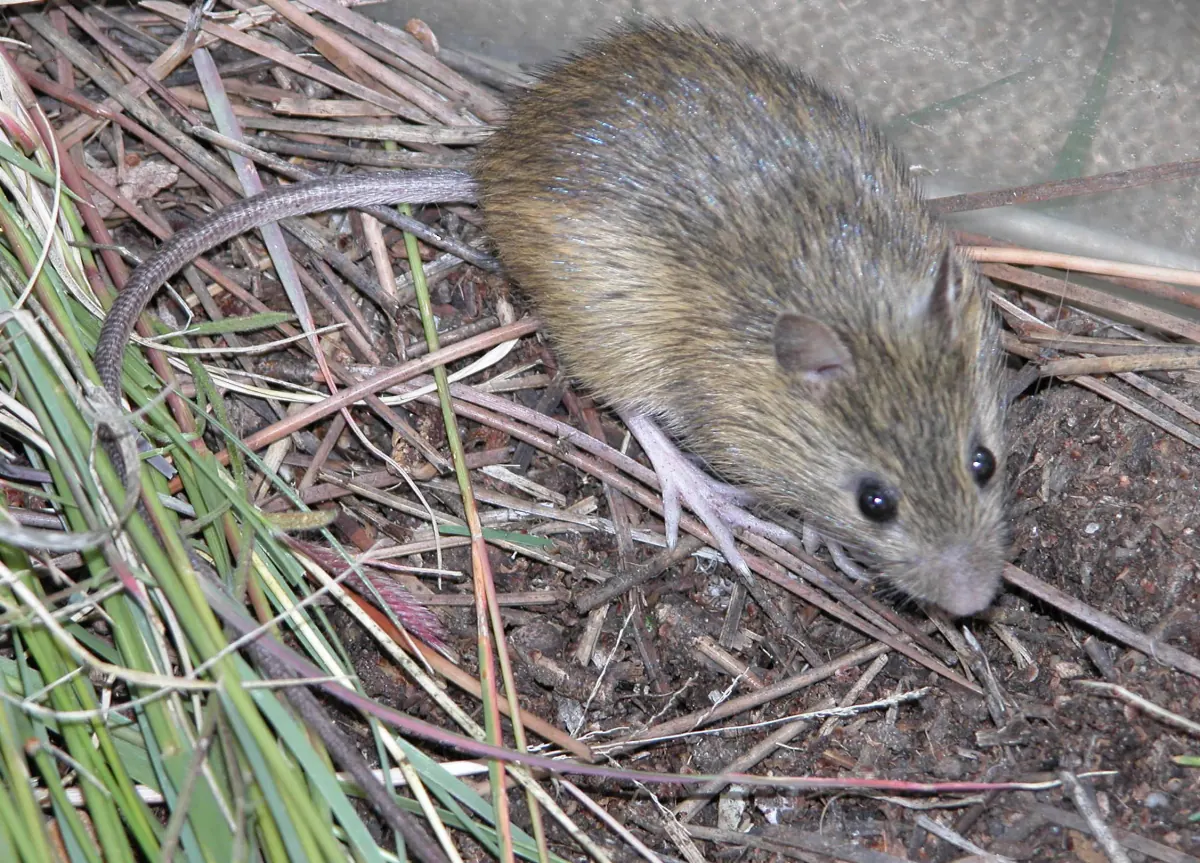
The Preble’s meadow jumping mouse (Zapus hudsonius preblei) is a tiny subspecies weighing about 17 grams (0.6 ounce) early in the season — found exclusively along the Front Range of Colorado and southeastern Wyoming. It lives only in dense riparian vegetation along streams and wetlands, a narrow ecological niche that makes it acutely vulnerable to the development pressure bearing down on the same landscape.
Biologists believe the subspecies arrived in its current range during the last ice age and became confined to stream-side ecosystems as the post-glacial climate dried around it. The streams became refugia — islands of moisture and dense vegetation in an increasingly arid landscape — and the mouse adapted to them completely. It is federally listed as threatened since 1998 under the Endangered Species Act, and Colorado Parks and Wildlife lists it as state threatened as well.
What makes this animal’s situation both urgent and solvable is the geography: its entire range overlaps almost exactly with the fastest-growing urban corridor in Colorado. The Front Range is where the people are. It is also where the mouse is. That collision defines the conservation challenge.
Natural History
The Preble’s is one of 12 recognized subspecies of the meadow jumping mouse and is distinguished from other subspecies primarily by genetic and morphological differences. Its total length runs 7 to 10 inches, with a tail comprising 4 to 6 of those inches — disproportionately long, used for balance during the leaping locomotion that gives jumping mice their name. Adults weigh less than 30 grams.
The mouse is a habitat specialist. It requires dense shrub cover — particularly willows, sedges, and tall grasses — limited forest canopy overhead, and diverse herbaceous ground cover in the understory of riparian and wetland systems. It rarely moves more than a few hundred meters from water and shows very low tolerance for degraded or disturbed habitat. It does not persist in lawns, parks, or manicured stream banks; it needs the tangled, unimproved, seemingly messy riparian vegetation that people are most likely to clear.
Preble’s mice are also obligate hibernators. They enter hibernation in September or October and emerge in May. That’s seven to eight months underground, which leaves only about four to five active months for breeding and fattening up.
Habitat in Colorado
In 2010, USFWS designated critical habitat for the Preble’s meadow jumping mouse covering approximately 411 miles of rivers and streams and 34,935 acres, all in Colorado: Boulder, Broomfield, Douglas, El Paso, Jefferson, Larimer, and Teller counties. This is the geographic core of Colorado’s Front Range urban corridor.
The mouse depends on intact riparian corridors: streams lined with dense native vegetation, connected to adjacent wetlands, and buffered from adjacent land uses. Connectivity between patches matters enormously. Isolated populations in fragmented urban landscapes cannot exchange individuals, cannot recolonize after local extinction events, and are vulnerable to demographic collapse.
Primary Threats
Urban development and habitat fragmentation are the dominant threats. Stream corridors that once supported continuous riparian habitat have been progressively severed by roads, bridges, trails, housing developments, and channelization projects. Each gap in the corridor is a barrier to dispersal.
Water diversions alter the hydrology that riparian vegetation depends on. Streams dewatered for agricultural or municipal use lose the soil moisture and flood pulse that maintain willows, sedges, and the dense understory the mouse requires. Climate-driven shifts in snowpack timing compound this pressure.
Overgrazing removes the dense herbaceous and shrub cover that provides both food and concealment from predators. Grazing directly on riparian areas — particularly by cattle with unrestricted stream access — is highly damaging.
Noxious weeds including smooth brome, reed canary grass, and Canada thistle can displace the native riparian plant communities the mouse depends on. Invasive plants often establish more aggressively in disturbed riparian areas.
Stormwater mismanagement is particularly significant where suburban and exurban development borders stream corridors. Impervious surfaces increase runoff volume and velocity, causing channel incision and bank erosion that degrades and simplifies riparian structure. The U.S. Air Force Academy supports one of the longest continuously monitored Preble’s populations, where surrounding development and stormwater runoff are ongoing concerns.
Political pressure to delist has been a recurring threat. USFWS proposed delisting in 2005 after a genetic study questioned the subspecies. It later withdrew that proposal and in 2013 found delisting not warranted. USFWS continues to recognize Z. h. preblei as a valid subspecies.
Recovery Efforts
USFWS published the final recovery plan in October 2018, developed in partnership with Colorado Parks and Wildlife, the Wyoming Game and Fish Department, The Nature Conservancy, the Colorado Natural Heritage Program, and other cooperators.
The plan establishes quantitative delisting criteria requiring two large, five medium, and several small wild populations to be maintained in a stable or increasing trend over ten consecutive years. Meeting that standard requires not just protecting existing habitat but actively restoring degraded riparian corridors and securing connectivity between fragmented populations.
The North Fork Cache la Poudre watershed community conservation effort — documented in a 2025 Frontiers in Conservation Science study — represents a model for meeting these criteria. The effort nominated a recovery population covering 102 stream miles supporting an estimated 4,000 individuals, developed through coordination among landowners, local governments, and conservation organizations.
The Table Top Conservation Bank in Larimer County was approved by USFWS in 2021 as Colorado’s first privately operated conservation bank. It protects about 222 acres of state trust land under a Colorado Open Lands conservation easement and sells mitigation credits for Preble’s habitat impacts.
What You Can Do
- Report sightings to iNaturalist (tagged Zapus hudsonius preblei) and to Colorado Parks and Wildlife — even negative survey results during the active season are useful data.
- If you own or manage land along a Front Range stream, maintain native vegetation buffers — particularly willows, sedges, and tall grasses — and avoid disturbance from May through September.
- Control noxious weeds in riparian areas; smooth brome and reed canary grass are particularly damaging to the dense native understory Preble’s mice require.
- Support conservation easements along Front Range riparian corridors. Permanent land protection is the most durable form of habitat security.
- If you work in land use planning or stormwater management: stream buffers matter. The difference between a manicured bank and a dense native buffer is often the difference between presence and absence.