Photo: Roy W. Lowe / USFWS — Public Domain
Montane Forest
Foothills and lower mountain slopes
By Threatened Colorado , Two Colorado natives , About us
Last reviewed , Checked against USFWS, CPW, NPS sources , Sources (16)
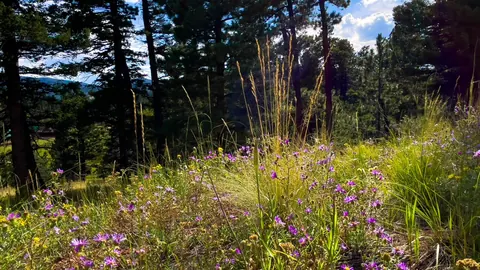
About 5,600–9,500 ft
Forests of ponderosa pine, lodgepole pine and Douglas-fir, with aspen groves and open meadows. Ponderosa pine is most common between 6,000 and 9,000 feet.
Why it matters
Montane country is a mix of forest and meadow. In Rocky Mountain National Park, the National Park Service says, elk graze the open meadows near the pine forests in winter, wildflowers bloom among the grasses in summer, and streams winding through the meadows create "riparian habitat for migrating songbirds."
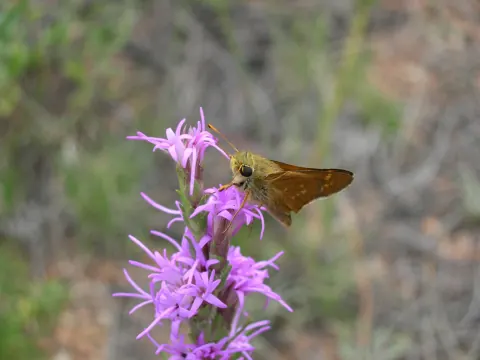
Some rare animals need it in a particular condition. The threatened Pawnee montane skipper lives only in "dry, open ponderosa pine woodlands" of the South Platte River drainage, USFWS says, where it depends on blue grama grass and prairie gayfeather.
Plants
- ponderosa pine
- lodgepole pine
- Douglas-fir
- aspen
- Lower montane shrublands on the Front Range: "Gambel oak is typically dominant, but very often mixed with other montane shrubs such as serviceberry, mountain mahogany, antelope bitterbrush, big sagebrush, chokecherry, and snowberry."Source: Colorado Natural Heritage Program, Ecological Systems: Oak – Mixed Mountain Shrublands
Which way the slope faces
Water decides which forest grows where. On dry, south-facing slopes the Park Service describes open stands of large ponderosa pines with grasses and shrubs between them. North-facing slopes lose less moisture to the sun, so trees grow closer together and taller, a mix of Douglas-fir, lodgepole pine, ponderosa pine and the odd Engelmann spruce. Flat valley floors are often too waterlogged for evergreens, which is why the montane zone has so many open meadows.
Ponderosa pine is usually the first forest above the plains. The Colorado State Forest Service calls it the dominant lower-timberline tree of the montane zone, covering about 2 million acres, 8% of the state's forested land; a long taproot carries it through drought. Lodgepole pine, just over 1.5 million acres, grows higher, between 8,000 and 10,000 feet in Colorado's northern Rockies.
Aspen fills the moist spots. It covers about 5 million acres, 20% of Colorado's forested land, and the State Forest Service ranks aspen forests second only to streamside areas for the variety of life they hold. Along streams the Park Service lists willows, mountain alder, water birch and sometimes blue spruce.
Fire, beetles and regrowth
Each montane tree has its own relationship with fire. Ponderosa pine evolved with frequent, low-intensity fires that killed competing seedlings and spared the big pines, the State Forest Service says. Most of Colorado's lodgepole forests, by contrast, grew back after hot, stand-replacing crown fires: many lodgepoles carry serotinous cones that open in extreme heat, and the regrowth can reach 20,000 or more trees per acre. Aspen sprouts from its roots, so it is often the first tree to fill a burn or clearing.
Without those low fires, shade-tolerant Douglas-fir fills in under the pines and can carry fire up into their crowns. Insects add to the change: mountain pine beetle and dwarf mistletoe are the most damaging agents in lodgepole pine, and the Douglas-fir beetle has affected about 18.5% of the state's mixed-conifer forests containing Douglas-fir since 2000.
Who lives here and why
Abert's squirrel is the montane zone's specialist: CPW says it lives only in ponderosa pine forests and eats whatever part of the pine is in season, including the cones and the inner bark of twigs. The Park Service also lists Steller's jay, pygmy nuthatch and western tanager among the zone's birds; western tanagers breed in the park each summer and fly south for winter.
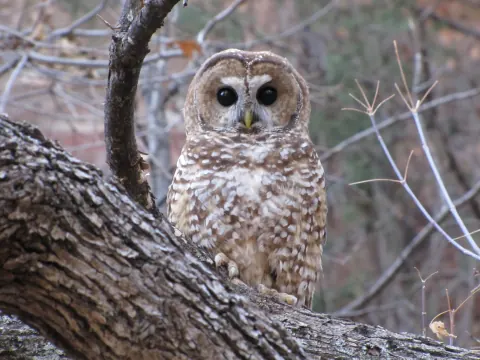
The threatened Mexican spotted owl nests and roosts in closed-canopy forests, often mature mixed conifer, or in rocky canyons. In Colorado most of its nests are in caves or on cliff ledges in steep-walled canyons; in forests most are in Douglas-firs, in witches' brooms caused by dwarf mistletoe. USFWS calls landscape-scale, stand-replacing wildfire its main threat today.
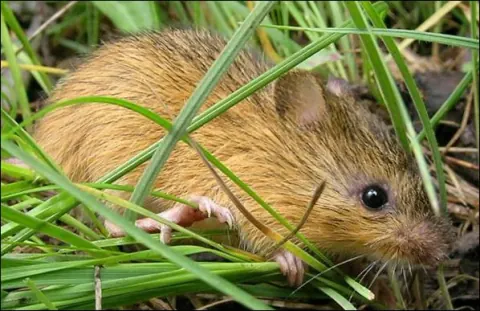
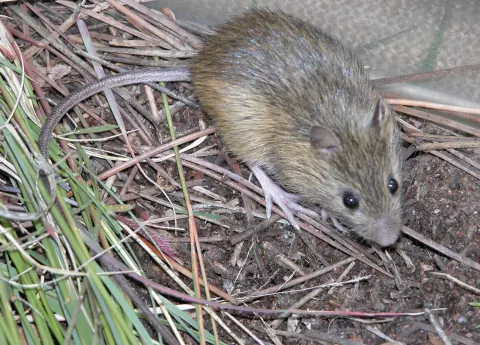
Two federally listed jumping mice live in the zone's streamside meadows, in separate parts of the state, CPW says: Preble's meadow jumping mouse along the foot of the Front Range, and the endangered New Mexico meadow jumping mouse on the southwestern border. Both depend on dense streamside plants.
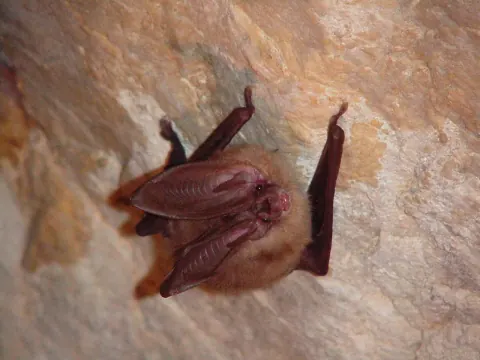
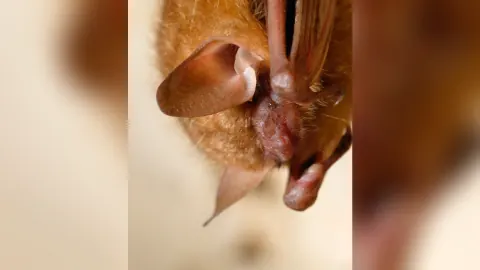
Even an eastern bat has turned up. In summer 2020, acoustic detectors in lodgepole pine forest on the Roosevelt National Forest recorded the tricolored bat, which USFWS has proposed listing as endangered; a 2024 study in the Journal of Mammalogy called it the first documentation of the species in Colorado's high-elevation forests.
Burned and open ponderosa pine is prime nesting ground for Lewis's woodpecker, which catches insects in the air instead of drilling for them and needs soft, decayed wood for its nest hole. A Forest Service assessment names fire suppression and post-fire management among the important factors in its numbers.
Under pressure
- A century without the right fires. A Forest Service synthesis of 78 Colorado ponderosa pine sites found fire returned about every 21 years on average, and that low-severity fire ended by about 1920 at 73 of them, leaving denser forests. Wildfire & Fire Suppression
- Then severe fire. The 2002 Hayman and Schoonover fires burned more than 36% of the Pawnee montane skipper's habitat, according to its five-year review; areas that were thinned have seen skipper numbers rise. Wildfire & Fire Suppression
Where to see it
Rocky Mountain National Park: Moraine Park, Upper Beaver Meadows, Horseshoe Park and the Kawuneeche Valley
The park's montane meadows and forests, on Bear Lake Road, near the Beaver Meadows and Fall River entrances on the east side, and in the Kawuneeche Valley on the west side.
Great Sand Dunes National Park and Preserve
Montane forests and woodlands grow along the drier foothills of the Sangre de Cristo Mountains.
Species in this habitat (18)
- Photo: Dana Shellhorn / USFWS — Public Domain
- Photo: Cody Stricker / iNaturalist — CC BY 4.0
- Photo: Lori Iverson / USFWS — Public DomainReintroduced
- Photo: Chris Kennedy / USFWS — Public Domain
- Photo: Shaula Hedwall / USFWS — Public Domain
- Photo: Jim Hudgins / USFWS — Public Domain
- Photo: USFWS — Public Domain
- Photo: Sam Stukel / USFWS — Public Domain
- Photo: USDA Forest Service — Public Domain
- Photo: Robert Schorr / Colorado Natural Heritage Program — Public DomainFeatured
- Photo: Chris Kitcheyan / USFWS — Public Domain
- Photo: Pam Sponholtz / USFWS — Public Domain
- Photo: Terry Ireland / USFWS — Public Domain
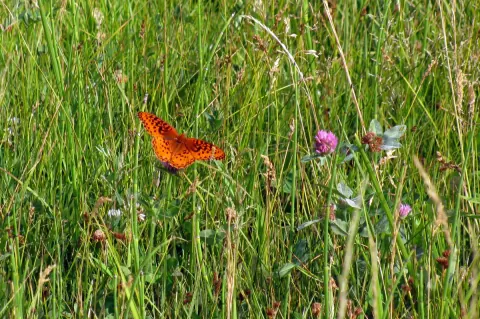
Silverspot Butterfly (Nokomis Fritillary)
Speyeria nokomis nokomis
invertebrate Wet Mountain Meadows - Photo: Kendra Parrish / iNaturalist — CC0
- Photo: NPS — Public Domain
- Photo: Pete Pattavina / USFWS — Public Domain
- Photo: Allison Clark / iNaturalist — CC0

See montane forest in the explorer
Sources (16)
- Colorado State Forest Service, Ponderosa Pine
- National Park Service, Rocky Mountain NP: Montane Ecosystem
- Colorado Natural Heritage Program, Ecological Systems: Oak – Mixed Mountain Shrublands
- U.S. Fish and Wildlife Service, Pawnee montane skipper (Hesperia leonardus montana)
- Colorado State Forest Service, Lodgepole Pine
- Colorado State Forest Service, Aspen
- Colorado State Forest Service, Douglas-fir
- Colorado Parks and Wildlife, Tree squirrels
- Bevan Zientek, Colpitts and Adams (2024), Forest characteristics predict tri-colored bat activity within novel Colorado habitats, Journal of Mammalogy
- U.S. Fish and Wildlife Service, Mexican spotted owl (Strix occidentalis lucida)
- Colorado Parks and Wildlife, Jumping mice
- U.S. Fish and Wildlife Service, New Mexican meadow jumping mouse (Zapus hudsonius luteus)
- USDA Forest Service, Fire Effects Information System: Fire regimes of Colorado ponderosa pine
- U.S. Fish and Wildlife Service, 5-year status review: Pawnee montane skipper
- National Park Service, Great Sand Dunes NP & Preserve: Natural features and ecosystems
- Abele, Saab and Garton (2004), Lewis's Woodpecker (Melanerpes lewis): a technical conservation assessment, USDA Forest Service, Rocky Mountain Region
Photo credits
- Montane Forest: NPS / Patrick Myers, Public domain