Overview
Black-tailed prairie dogs are still common in parts of Colorado, but they are a state species of special concern because plague and habitat loss can erase whole colonies. Many plains animals, from ferrets to burrowing owls, depend on them.
CPW lists the black-tailed prairie dog as a State Special Concern species, and its 2025 State Wildlife Action Plan ranks it Tier 2. At the same time, CPW describes the species as abundant, and landowners may legally remove prairie dogs that damage crops, property or livestock.
The black-tailed prairie dog has never been federally listed. It was a federal candidate from 2000 to 2004, and in 2009 the U.S. Fish and Wildlife Service found that listing was not warranted. NatureServe ranks it G4, and S3 in Colorado.
A Keystone Species
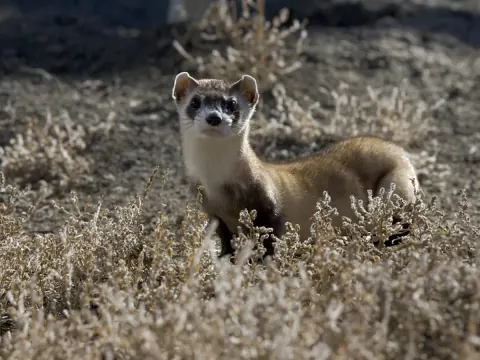
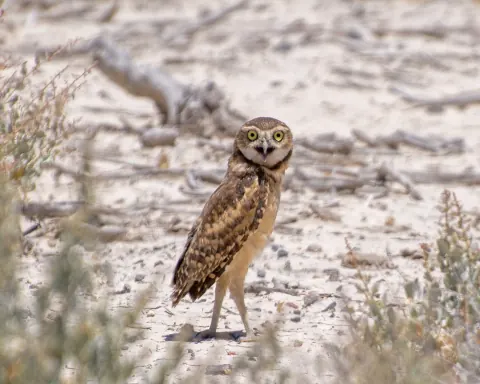
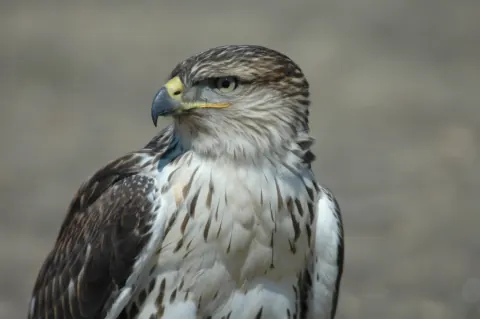
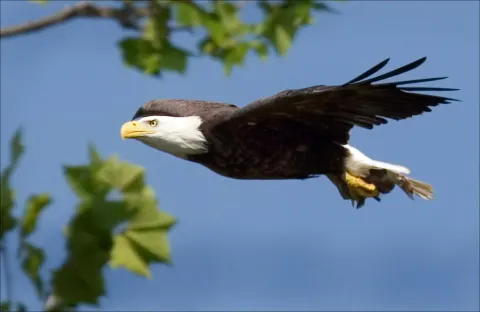
CPW calls prairie dogs “a keystone species integral to the health of ecosystems.” It names burrowing owls, golden eagles, ferruginous hawks, thick-billed longspurs and mountain plovers as birds that rely on prairie dog colonies.
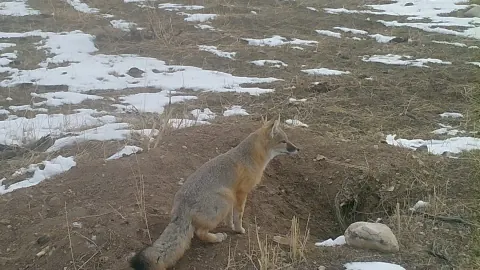
In 2009, USFWS identified at least 8 species that depend on prairie dog colonies. The black-footed ferret depends on them most: it lives in prairie dog burrows and eats prairie dogs.
Burrowing owls nest in empty prairie dog burrows.
Natural History
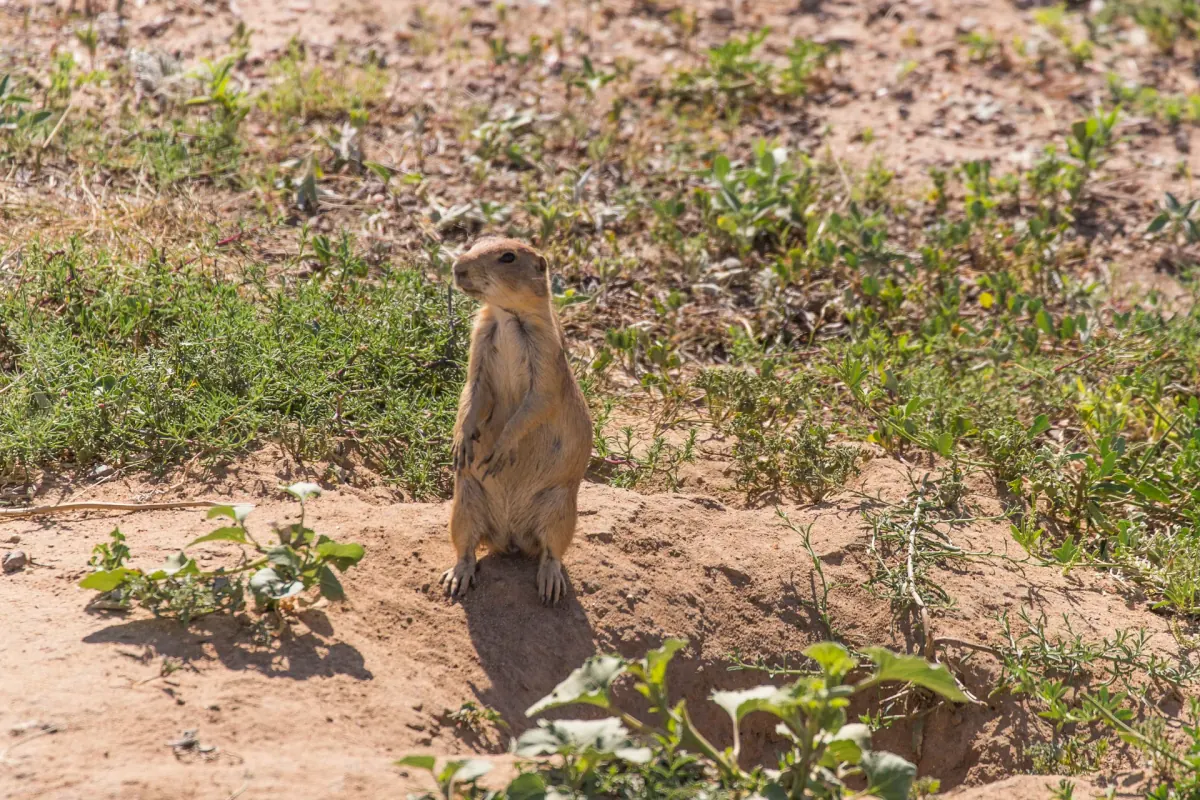
Adult black-tailed prairie dogs weigh 1.5 to 3 pounds and are 14 to 17 inches long.
Unlike white-tailed and Gunnison’s prairie dogs, black-tailed prairie dogs do not hibernate; they are active year-round in Colorado.
They live in colonies, or “towns,” which are divided into family groups called coteries. Their burrows run up to about 7 feet deep and 16 feet long.
Black-tailed prairie dogs mate once a year, in early spring. After a gestation of 4 to 5 weeks, litters of 2 to 8 pups are born.
Their diet is about 98% grasses and other plants. Females can live about 8 years, and males about 5.
Research, largely on the related Gunnison’s prairie dog, suggests prairie dog alarm calls can carry information about a predator’s type, size and even color.
Prairie Dogs in Colorado
CPW aerial mapping of summer 2020 imagery found about 500,375 occupied acres of black-tailed prairie dog colonies in Colorado.
A 2006 survey had found about 788,657 acres, roughly a third of all occupied habitat in the U.S. A 2015 range-wide estimate put Colorado’s acreage at 532,251, the most of any state.
Across the species’ whole range, occupied habitat is estimated at about 2 million acres, compared with an estimated 80 to 100 million acres historically: roughly 98% less, though the historical figure is itself an estimate.
Boulder’s open space had about 5,100 acres of prairie dog colonies in 2025, down from about 5,500 acres in 2024; lethal control has been used there since 2021. In 2025, La Plata County investigated plague after a mass prairie dog die-off.
Primary Threats
Sylvatic plague
Plague is caused by the bacterium Yersinia pestis and spread by fleas. It was introduced to North America, and it can kill nearly all the prairie dogs in an infected colony. Rocky Mountain Arsenal and the Comanche National Grassland had near-total die-offs.
Other threats
Poisoning and control programs, conversion of grassland to farms, recreational shooting, and urban development also threaten prairie dogs.
Recovery & Conservation
Federal reviews
USFWS found listing the black-tailed prairie dog “warranted but precluded” on February 4, 2000, which made it a candidate for listing. It was removed from the candidate list in August 2004. After a new petition in 2007, USFWS found listing not warranted on December 3, 2009.
State rules
Capturing and relocating prairie dogs requires a CPW permit. Recreational hunting requires a small game license. On public land, the season runs from June 15 to the end of February; on private land, it is open year-round.
Fighting plague
Two tools have been field-tested, including in Larimer County: dusting burrows with the insecticide deltamethrin, and an oral plague vaccine bait. Both improved survival in some colonies, and timing mattered.
In a 2013–2015 trial on 29 paired plots in 7 states, prairie dogs on vaccine plots were 1.76 times (adults) and 2.41 times (juveniles) as likely to survive plague outbreaks.
CPW says it has an oral vaccine and a vaccination program.
What You Can Do
- Don’t handle sick or dead wildlife.
- Protect your pets. Use flea control on pets, and keep them away from colonies and carcasses.
- Protect yourself near colonies. Wear long clothing and repellent.
- Watch for symptoms. See a doctor if you have a fever or flu-like symptoms within 14 days of contact.
- Report die-offs to CPW or your county health department.
- See a colony. View prairie dog colonies from the Wildlife Drive at Rocky Mountain Arsenal National Wildlife Refuge, an 11-mile free route open from sunrise to sunset.
Sources
- Colorado Parks and Wildlife, prairie dogs species page
- CPW, threatened and endangered wildlife list
- CPW, living with prairie dogs
- CPW, State Wildlife Action Plan
- USFWS (2004), black-tailed prairie dog removed from the candidate species list
- Federal Register (2009), 12-month finding on the black-tailed prairie dog
- NatureServe Explorer, black-tailed prairie dog
- The Prowers Journal (2022), CPW completes survey of black-tailed prairie dog habitat
- 2015 range-wide black-tailed prairie dog report (WEST)
- National Park Service, prairie dog distribution
- National Park Service, prairie dog status
- USFWS, Rocky Mountain Arsenal National Wildlife Refuge species
- USFWS, Rocky Mountain Arsenal National Wildlife Refuge
- Smithsonian’s National Zoo, black-tailed prairie dog
- Research on prairie dog alarm calls and predator colors
- USGS, field trials of plague management tools
- EcoHealth (2017), oral plague vaccine field trial
- Boulder Reporting Lab (2026), prairie dog populations decline on Boulder open space
- KKTV (2025), plague suspected after mass prairie dog die-off