Overview
The kit fox is North America’s smallest fox and one of Colorado’s most endangered mammals. It lives only in the desert shrublands of western Colorado, and surveys suggest it may be close to disappearing from the state.
Colorado lists the kit fox as State Endangered, and it has been state endangered since 1998. Colorado Parks and Wildlife calls it “one of the state’s most vulnerable mammal species.”
A 2007 survey report described the kit fox as “close to extirpation” in Colorado.
Natural History
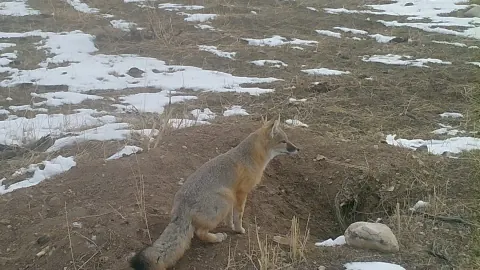
The kit fox is the smallest fox in North America. It weighs about 3 to 6 pounds, “about the size of a full-grown jackrabbit,” in CPW’s words. It has very large ears set close together, and it is mostly active at night.
Kit foxes eat mainly cottontails, jackrabbits, white-tailed prairie dogs, rock squirrels and kangaroo rats. When that prey is scarce, they also eat birds, reptiles and insects.
A kit fox digs its own dens or adapts badger diggings and prairie dog burrows. One fox may use up to 10 dens clustered in about 2 to 3 acres (0.8–1.2 hectares), and dens are used year-round.
Kit foxes breed from December to February. Litters have 2 to 6 pups, typically 4 or 5.
Kit Fox or Swift Fox?
The kit fox and the swift fox look alike. The kit fox has larger ears and lives only on the Western Slope; the swift fox lives on the eastern plains.
Habitat in Colorado
In Colorado, kit foxes live in the semi-desert shrublands extending from Montrose to Grand Junction. Elsewhere, they range across Arizona, California, Nevada, New Mexico, western Texas, Utah, southern Oregon and central Mexico.
The 2007 survey report found that suitable habitat in Colorado had shrunk from about 1.83 million hectares historically to about 120,000 hectares.
Decline in Colorado
Surveys in 1992–96 found kit foxes in only four Colorado counties. They estimated the population at fewer than 100 and found no evidence of self-sustaining populations. Follow-up work in 1997–2000 indicated a further decline.
In 2007, a track-plate survey made about 700 plate checks. It found a single probable kit fox track, in Montrose County in September 2007. The report described the species as “close to extirpation” in Colorado.
No newer statewide survey results have been published, so whether kit foxes still live in Colorado is uncertain.
Primary Threats
CPW lists predation by coyotes, road kill, trapping, shooting and predator poisoning as threats, along with loss of habitat to agriculture and development. The Bureau of Land Management adds habitat fragmentation and disturbance from off-highway vehicles.
Recovery & Conservation
Federal status
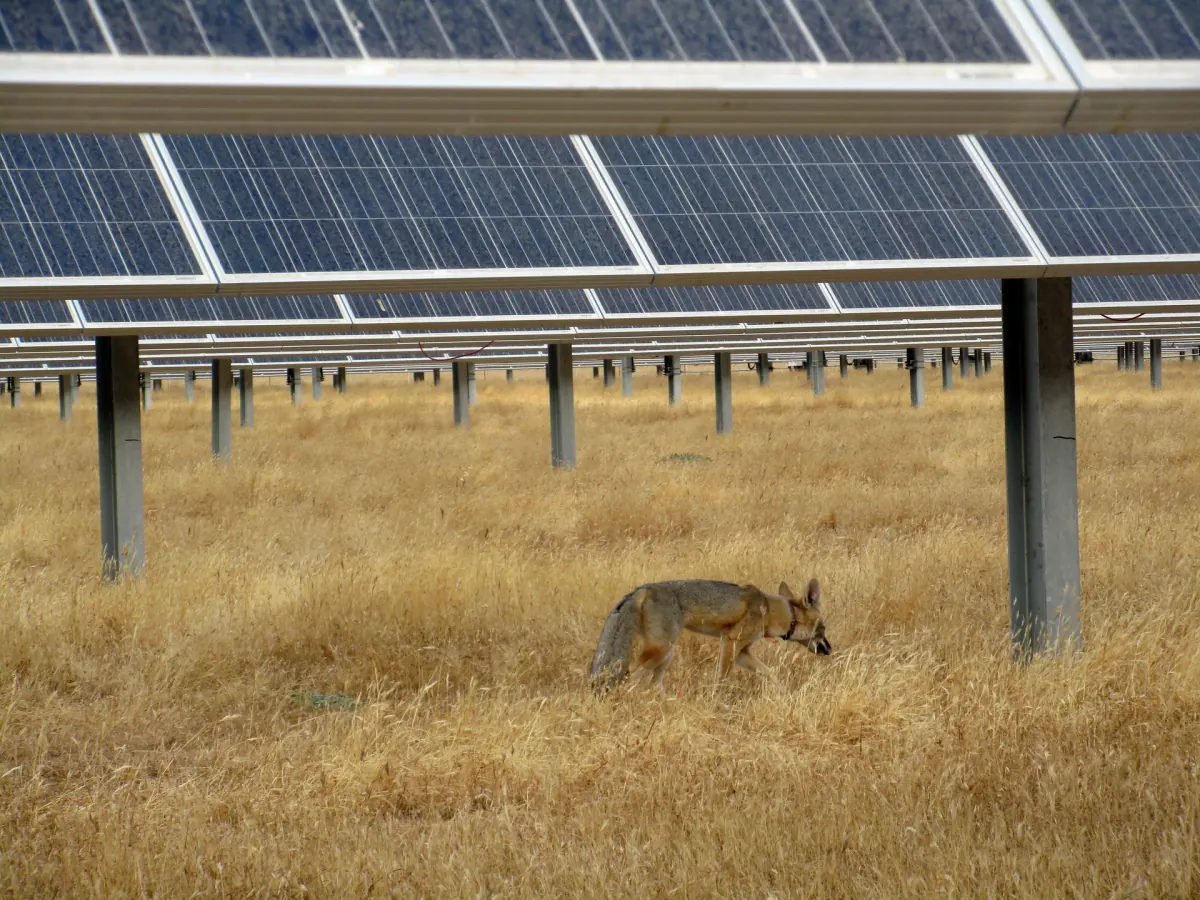
The kit fox as a species is not federally listed. Only the San Joaquin kit fox, a subspecies in California, is federally endangered. The photo on this page shows a San Joaquin kit fox in California.
Rankings
NatureServe ranks the kit fox G4, apparently secure range-wide, but S1, critically imperiled, in Colorado. BLM Colorado lists it as a sensitive species.
What You Can Do
- Report a possible kit fox. Send a photo, the date and the location to your local CPW office.
- Stay on designated routes when driving or riding off-highway vehicles in desert shrublands.
- Drive carefully at night.
- Explore related species. Read the swift fox profile.
Sources
- Colorado Parks and Wildlife, kit fox species page
- CPW, threatened and endangered wildlife list
- Colorado Division of Wildlife, 2007 kit fox survey progress report (southwestern region)
- NatureServe Explorer, kit fox
- BLM Colorado sensitive species list (2023)
- Animal Diversity Web, Vulpes macrotis
- CPW, swift fox species page