What it is
Whirling disease is caused by the parasite Myxobolus cerebralis. It is thought to have been introduced from Europe, and it was first detected in the United States in 1958.
The parasite needs two hosts: a trout or other salmonid, and the small aquatic worm Tubifex tubifex. Worms eat spores released from infected fish. The parasite multiplies in the worm, which then releases the stage that infects fish.
How it spreads
Whirling disease cannot pass directly from fish to fish. It moves through the worm stage of its life cycle, and its spores can stay viable for up to 30 years.
In Colorado, hatcheries spread it. Infected fish reached state and private hatcheries in the late 1980s, spreading the parasite to about 40 stocking locations.
In Colorado
- 1980s: Researchers trace its arrival in the upper Colorado River to privately reared rainbow trout stocked into three private ponds above Windy Gap Reservoir in the 1980s.
- 1988: Fish downstream tested positive.
- Late 1980s: Infected fish reached state and private hatcheries, spreading the parasite to about 40 stocking locations.
- 1995: Leadville National Fish Hatchery found the parasite.
- Late 1990s: Whirling disease invaded the Trappers Lake population of Colorado River cutthroat trout.
- 2004: CPW began stocking whirling-disease-resistant rainbow trout in the lower Gunnison River, and in the upper Colorado River in 2006.
- 2007: Leadville National Fish Hatchery was certified free of whirling disease.
Effects on wildlife
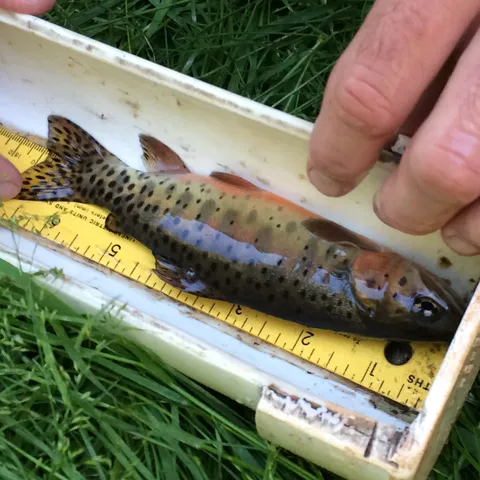
The parasite penetrates the head and spinal cartilage of young trout, putting pressure on the organ of balance, so fish swim erratically, or whirl, and struggle to feed and escape predators. Survivors can be deformed, and infected fish may show dark tails. Younger fish are more susceptible than older fish. Rainbow trout are the most susceptible, followed by cutthroat, brook and brown trout.
Lower Gunnison River rainbow trout declined by more than 90% after the parasite arrived, and upper Colorado River rainbows collapsed similarly. CPW says whirling disease is “believed to be a major factor in the declines of wild rainbow trout populations across Colorado waters.”
Native cutthroat
For the greenback cutthroat trout, USFWS’s 2009 five-year review says: “Young greenbacks are highly susceptible to whirling disease. Greenbacks less than 1 year of age had a mortality of greater than 25% when lightly exposed to the disease.” As of 2009, it says, “no known wild greenback populations have been infected.”
On December 9, 2024, USFWS found federal listing of the Rio Grande cutthroat trout not warranted. It named nonnative trout as the primary threat and “habitat loss, reduced habitat connectivity and whirling disease” as additional threats.
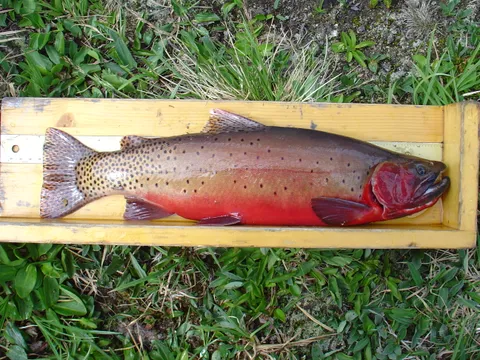
CPW says whirling disease invaded the Trappers Lake population of Colorado River cutthroat trout in the late 1990s and “has now firmly established itself suppressing recruitment of cutthroat trout.”
What’s being done
Resistant rainbows
CPW bred whirling-disease-resistant rainbow trout from the German “Hofer” strain crossed with wild Colorado strains. It began stocking them in the lower Gunnison in 2004 and the upper Colorado in 2006, and resistant strains have since been stocked into all major Colorado coldwater drainages. Wild rainbow populations there have kept the genes for resistance.
Clean hatcheries
Leadville National Fish Hatchery found the parasite in 1995, installed filters and ultraviolet treatment, and was certified free of whirling disease in 2007.
Stocking rules
Colorado Wildlife Commission policy D-9 prohibits stocking salmonids that test positive for the parasite.
Does it affect people?
No. In the words of a state guide: “Whirling disease does not affect humans, so you don’t have to be concerned about eating trout.”
How you can help
- Clean, drain and dry your gear. Remove plants, animals and mud, and wash boats, trailers, waders and gear before leaving a lake or stream.
- Never move fish from one body of water to another.
- Use live bait fish only in the water they came from. Colorado fishing regulations require it.