What Are Colorado's State Animals?
Short answer
Colorado's official state animal is the Rocky Mountain bighorn sheep, adopted in 1961. The state also names a bird (lark bunting), a fish (greenback cutthroat trout), a reptile (western painted turtle), an amphibian (western tiger salamander) and an insect (Colorado hairstreak butterfly).
By Threatened Colorado , Two Colorado natives , About us
Last reviewed , Checked against USFWS, CPW sources , Sources (20)
Six wild animals carry an official Colorado title. Students campaigned for three of them, and three are in real trouble today.
-
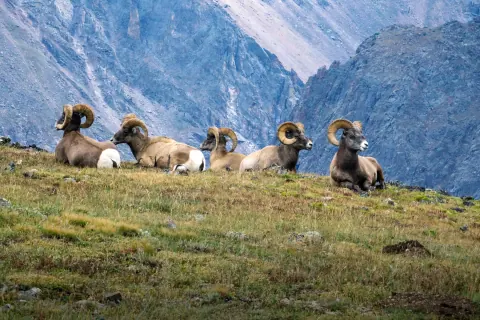 State animal · 1961 Rocky Mountain bighorn sheep
-
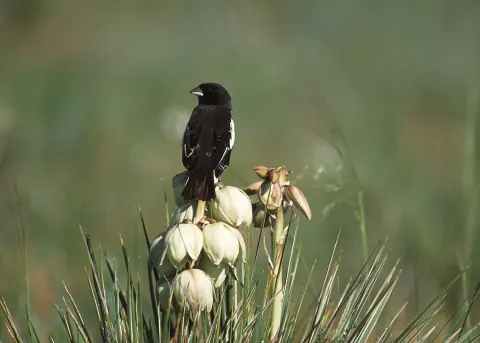 State bird · 1931 Lark bunting
-
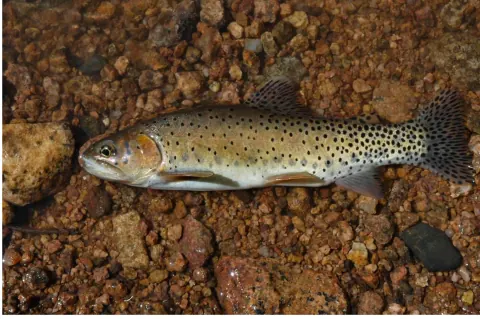 State fish · 1994 Greenback cutthroat trout
-
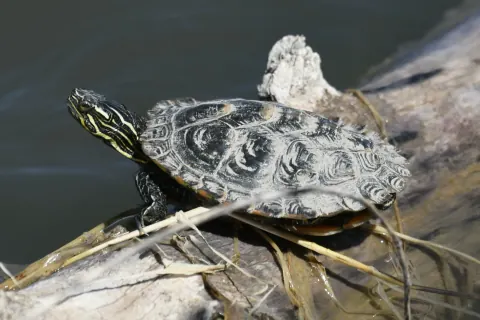 State reptile · 2008 Western painted turtle
-
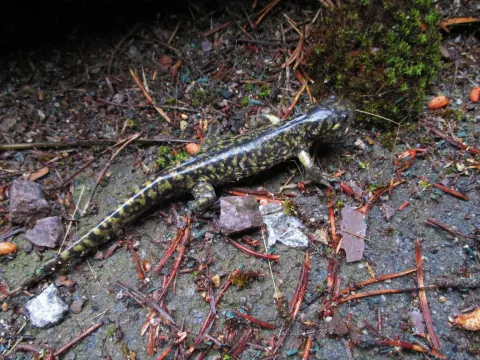 State amphibian · 2012 Western tiger salamander
-
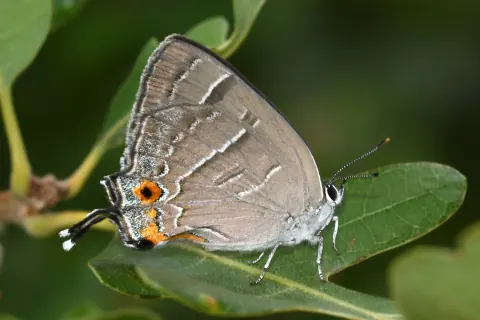 State insect · 1996 Colorado hairstreak
Photos: National Park Service, Rocky Mountain National Park (Public Domain); USDA Natural Resources Conservation Service (Public Domain); Chris Kennedy / USFWS (Public Domain); Joshua Smith / iNaturalist (CC0); Rosa Prasser / NPS (Public Domain); Peter DeGennaro / iNaturalist (CC BY-NC 4.0)
State animal · 1961
Rocky Mountain bighorn sheep
Colorado holds the largest population of the species anywhere, Colorado Parks and Wildlife says. The law that made the bighorn the state animal also protects it: no one may hunt, take or kill one except as state wildlife law allows. Its main threat is pneumonia carried by domestic sheep and goats. 2023 was CPW's worst herd-health year in more than a decade, with all-age die-offs in four herds.
- Adopted May 1, 1961
- Senate Bill 294
- C.R.S. 24-80-911
State bird · 1931
Lark bunting
The oldest of Colorado's state animals is a summer bird of the plains, arriving in April and flying south in September. It is also in steep decline: USGS Breeding Bird Survey counts in Colorado fell about 4.8% a year from 1968 to 2024, and CPW lists it as a Tier 2 Species of Greatest Conservation Need.
- Adopted April 29, 1931
- House Bill 222
- C.R.S. 24-80-910
State fish · 1994
Greenback cutthroat trout
The state fish is the only one of the six on the federal endangered species list: listed endangered in 1967 and downlisted to threatened in 1978. Only one original wild population survived. Since 2014, CPW, the U.S. Fish and Wildlife Service and partners have used that stock to return greenbacks to several South Platte basin waters.
- Adopted March 15, 1994
- House Bill 1164
- C.R.S. 24-80-911.5
State reptile · 2008
Western painted turtle
In 2007, fourth graders at Skyline Vista Elementary noticed that Colorado had no state reptile and chose this one, the Colorado State Archives says. The turtle is ranked secure in Colorado, and taking painted turtles from the wild ended under CPW's 2026 rules.
- Adopted March 2008
- HB 08-1017
- C.R.S. 24-80-911.3
State amphibian · 2012
Western tiger salamander
Students from several schools pushed for a state amphibian, the State Archives says. The tiger salamander is the only salamander native to Colorado and lives statewide, from plains ponds to mountain lakes. Some of its larvae grow into cannibals. It is ranked secure.
- Adopted March 16, 2012
- House Bill 12-1147
- C.R.S. 24-80-911.4
State insect · 1996
Colorado hairstreak
CSU Extension says the campaign was coordinated through Melinda Terry's fourth grade class at Wheeling Elementary in Aurora and spread to classes across the state, which made Colorado the 37th state with a state insect or butterfly. This purple-winged butterfly lives in the Gambel oak of the foothills and is ranked secure.
- Adopted April 17, 1996
- Senate Bill 122
- C.R.S. 24-80-913
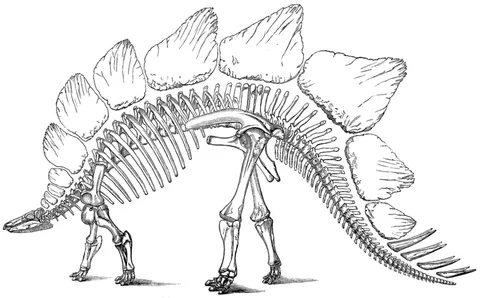
State fossil · 1982
Stegosaurus
Colorado also has an official dinosaur. The Stegosaurus was named by executive order rather than by a bill, the State Archives says, after a fourth-grade class campaigned across the state for two years.
- Named April 28, 1982
- Executive order, Gov. Richard D. Lamm
How Colorado names a state animal
Each title is set by law: the General Assembly passes a bill, the governor signs it, and it joins the “State Emblems and Symbols” part of the Colorado Revised Statutes. Students led the campaigns for the insect, the reptile, the amphibian and the state fossil, and CSU says classes across the state used the hairstreak bill as a civics lesson. Teachers can find classroom activities on the For Teachers page.
- 1931 Lark bunting
- 1961 Bighorn sheep
- 1982 Stegosaurus (student campaign)
- 1994 Greenback cutthroat trout
- 1996 Colorado hairstreak (student campaign)
- 2008 Western painted turtle (student campaign)
- 2012 Western tiger salamander (student campaign)
Which state animals are at risk?
Three of the six are in trouble, and three are common and secure. See every at-risk animal on the species list.
In trouble
- Greenback Cutthroat Trout
Only one original wild population survived
Federal:ThreatenedCO State:Threatened -
-
Secure
Quick reference
| Symbol | Animal | Adopted | Status today |
|---|---|---|---|
| State animal | Rocky Mountain bighorn sheep | 1961 | Species of Greatest Conservation Need (Tier 2) |
| State bird | Lark bunting | 1931 | Species of Greatest Conservation Need (Tier 2) |
| State fish | Greenback cutthroat trout | 1994 | Federally and state threatened |
| State reptile | Western painted turtle | 2008 | Secure (NatureServe S5) |
| State amphibian | Western tiger salamander | 2012 | Secure (NatureServe S5) |
| State insect | Colorado hairstreak | 1996 | Secure (NatureServe S5) |